




Dokumentarfotografie
Die Liste enthält 3 Einträge. Suchergebnisse löschen und Gesamtbestand anzeigen.
| Abbildung |
Beschreibung Gesamte Buchaufnahme |
Preis EUR |
|
|---|---|---|---|
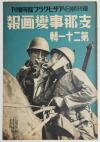 |
Kawabata, Ryushi (Cover art). Weekly Asahi (Photo Weekly). 3 special issues, November 22, 1934 „China affairs change report part 8“; December 17, 1938 „China affairs change 25th report“; August 25, 1942 „China affairs change report 21st“. Tokyo, Asahi Shimbun Company 1937-1942. Folio (39 x 26,5 cm.). 34, (2) pages each, with numerous illustrations based on photographs by Kageyama Masao, Otsuka Gen, Hashida Ken, Tabata Masa, Ueda Mutsuo. The publisher’s illustrated paper covers.
See Heiting/Ryuichi 99 ff. (″Shinajihen shashin zenshu, jo: Hokushi sensen“; Second Sino-Japanese War. Photographs Collection, Vol 1-6“ Tokyo 1937). – A rare Japanese weekly newspaper featuring photographic records from the Second Sino-Japanese War. – „On 7 July 1937, an incident occurred at the Marco Polo Bridge, during which Japanese and Chinese soldiers exchanged fire. Whether this incident was provoked by Japan is a matter of debate. This incident marked the start of the Second Sino-Japanese War. The Japanese had expected a swift victory, but the Second Battle of Shanghai lasted unexpectedly long and claimed numerous casualties. Around 200,000 Japanese and an unknown number of Chinese soldiers were embroiled in fierce street fighting. Casualties were very high on both sides; on the Kuomintang side, they are estimated at around one third of the soldiers fit for combat. Japan was not able to secure victory until mid-November, when the Japanese 10th Army landed in Hangzhou Bay and threatened to encircle the Chinese troops. … On 9 December 1941, China declared war on Germany, Italy and Japan. Until then, China had refrained from declaring war because, under international law, this would have allowed Japan to impose a blockade on all Chinese ports, thereby cutting off Chinese supplies by sea, and partly because an official declaration of war would have jeopardised American support due to US neutrality laws. The puppet regime (Reorganised Government of the Republic of China) installed by the Japanese in Nanjing under Wang Jingwei, in turn, declared war on the USA and the United Kingdom in 1943. In 1944, the Japanese went on the offensive once more and established a fragile land link between their conquered territories in northern and southern China“ (Wikipedia). – All issues are in very good condition. Schlagwörter: Documentary photography, Dokumentarfotografie, Dokumentarphotographie, Japan, Magazines, Second Sino-Japanese War, World War, 1939-1945, Zeitschriften |
450,-- |  |
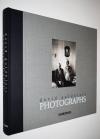 |
Goldblatt, David. Photographs. (Introduction by Martin Parr. Essays by Lionel Abrahams and Rory Bester). First edition. Rom, Contrasto (2006). Quer-4°. 255, (1) S. mit Tafeln in Duotone und Farbe. Orig.-Leinenband mit Deckelbild.
„David Goldblatt is South Africa’s most important photographer. He has produced a body of work that is an original and extensive study of South Africa during and after apartheid. His On The Mines (1973), with a text by Nadine Gordimer, Some Afrikaners Photographed (1975), and Lifetimes: Under Apartheid (1986), again with a text by Gordimer, document the complexity of South African lives, and are considered milestones in the history of photography. His following work on built structures, the human landscape that speaks of the forces shaping South African society from colonial times up to the end of white domination, led to the exhibition of his most somber works, “Structures,” at The Museum of Modern Art, and to publication of South Africa: the Structure of Things Then (1998).“ (Contrasto). – Neuwertiges Exemplar. Schlagwörter: Apartheid, Dokumentarfotografie, South Africa, Südafrika |
70,-- | |
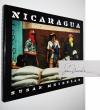 |
Meiselas, Susan. Nicaragua. June 1978 – July 1979. Edited with Claire Rosenberg. (Conversation with Kristen Lubben). Second Aperture edition. New York, Aperture (2016). Quer-Gr.-8° (22 x 27,5 cm.). [3] Bl., 71 Farbtafeln, [19] Bl. mit 1 Karte. Orig.-Leinenband mit farbig illustr. Schutzumschlag.
Auer 626. Parr/Badger II, 252. – Neuausgabe des wichtigsten Werks der Magnum Fotografin. – Von S. Meiselas signiert. – „Some of the most vicious wars of the 1970s were fought in Latin America, where Marxist or simply people’s revolts sought to overthrow military dictatorships and the bleeding of a country’s resources by small oligarchies. One such country was Nicaragua, where the generally hated regime of President Anastasio ‚Tachito‘ Somoza, after a long and bitter struggle, was defeated by the broadly left-wing but popular FSLN (Sandinista National Liberation Front). The Magnum photographer Susan Meiselas, by her own admission more or less stumbled into photographing the conflict by accident, but then stayed in Nicaragua on and off until Somoza was eventually ousted. From Meiselas’s involvement stemmed one of the best war photobooks since those produced during the conflict in Vietnam. Meiselas’s book is notable firstly because she shot it in colour, at a time when black and white was stil regarded as de rigueur for combat photography, although attitudes were changing around that time. Colour was regarded as too distracting and not gritty enough for photographing the harsh realities of war, despite thefact that blood is a bright, unrealred. But in Nicaragua, she proved that colour has virtues of its own, potentially adding irony and counteracting sentimentality. … Nevertheless, Nicaragua remains a powerful and exemplary chronicle of the kinds of conflict that proliferated in the late twentieth century“ (Martin Parr zur ersten Ausgabe, New York 1981). – Sehr gutes Exemplar. Schlagwörter: Documentary photography, Dokumentarfotografie, Nicaragua, Photojournalism, Photojournalismus, Signierte Bücher |
250,-- | |
|
Einträge 1–3 von 3
Zurück · Vor
|
|||
| Seite: 1 |