NEUER E-KATALOG: Neueingänge August 2026 – Wir stellen aus: Rare Book Week Berlin. Internationale Messe für Bücher & Graphik 18.-20. September 2026, Kronprinzenpalais, Unter den Linden 3, 10717 Berlin, [https://rarebookweek.berlin] – Polycopies Photobook-Fair, Paris, Bateau Concorde-Atlantique – Port de Solferino, 11.-15. November 2026, [http://www.polycopies.net/] – Gemeinschaftskatalog zusammen mit Antiquariat Norbert Knöll, Lüneburg: POPKULTUR / POP CULTURE Bücher, Fotografien, Schallplatten und Graphik. – PHOTOGRAPHIE / PHOTOGRAPHY – wichtige Fotobücher von 1839 bis heute, darunter zahlreiche Widmungsexemplare und Bücher mit Orig.-Photographien (kann unter „Aktuelle Kataloge“ abgerufen werden). – Außerdem finden Sie Beiträge von uns im virtuellen „Schaufenster“ des Verbandes Deutscher Antiquare (VDA) [https://schaufenster.antiquare.de/trefferliste.php?ID=22] (oder über „Links“ VDA) – Versandkosten ins Ausland auf Anfrage. – Besuchen Sie uns in unserem neuen Ladengeschäft in der Kaiserstrasse 99 in Karlsruhe (Mo.-Fr. 11-18 Uhr, Sam. 11-16 Uhr) mit einer reichen Auswahl seltener und schöner Bücher aus allen Gebieten, Graphik und Photographien. – Instagram: rarebookskarlsruhe – NEW E-CATALOGUE: New arrivals August 2026 – We are exhibiting at: Rare Book Week Berlin. International Fair for Books & Prints, 18–20 September 2026, Kronprinzenpalais, Unter den Linden 3, 10717 Berlin, https://rarebookweek.berlin – Polycopies Photobook Fair, Paris, Bateau Concorde-Atlantique – Port de Solferino, 11–15 November 2026, http://www.polycopies.net/ – Joint catalogue with Antiquariat Norbert Knöll, Lüneburg: POP CULTURE – books, photographs, records and prints. – PHOTOGRAPHY – important photobooks from 1839 to the present day, including numerous signed copies and books containing original photographs (available under ‘Current Catalogues’). – You will also find our listings in the virtual ‘shop window’ of the Association of German Antiquarian Booksellers (VDA) at https://schaufenster.antiquare.de/trefferliste.php?ID=22 (or via the ‘Links’ section on the VDA website) – postage costs for international orders available on request. – Visit us at our new shop at Kaiserstrasse 99 in Karlsruhe (Mon–Fri 11am–6pm, Sat 11am–4pm), where you’ll find a rich selection of rare and beautiful books from all subject areas, as well as prints and photographs. – Instagram: rarebookskarlsruhe

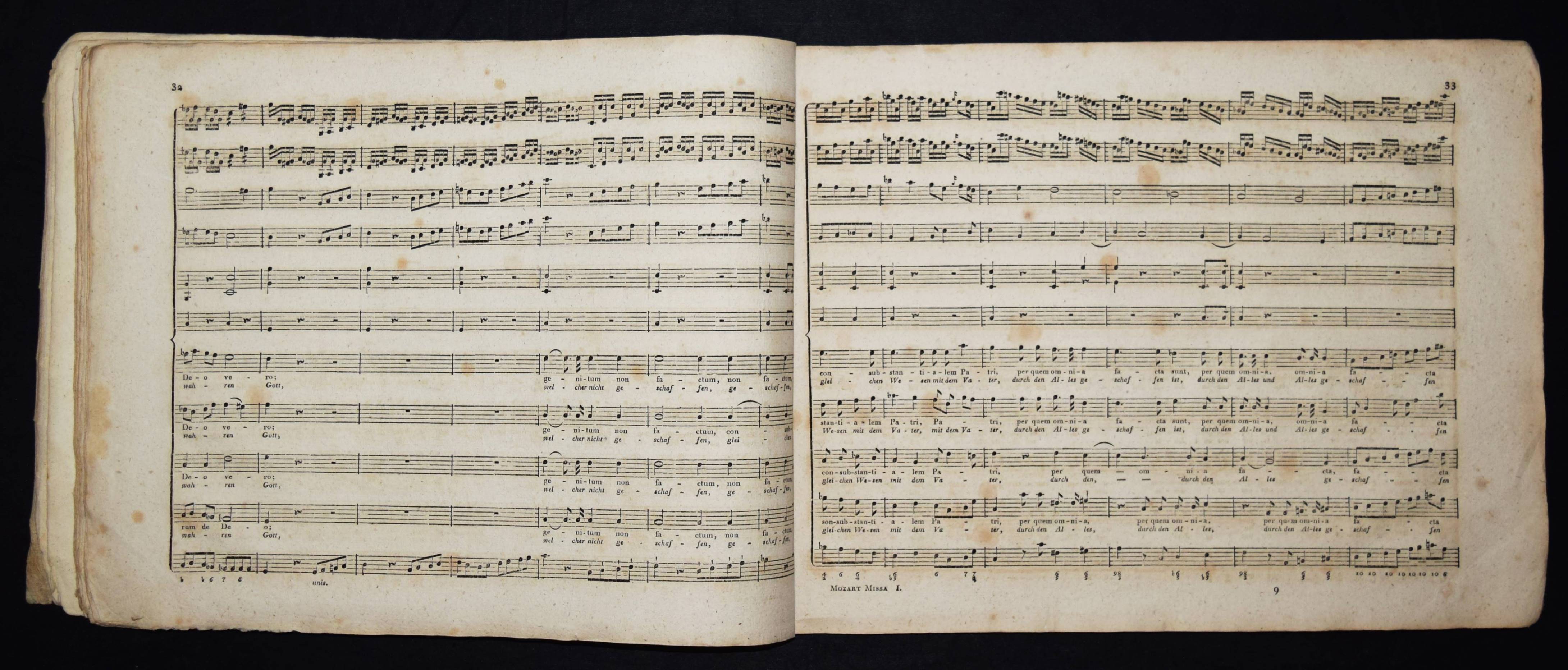
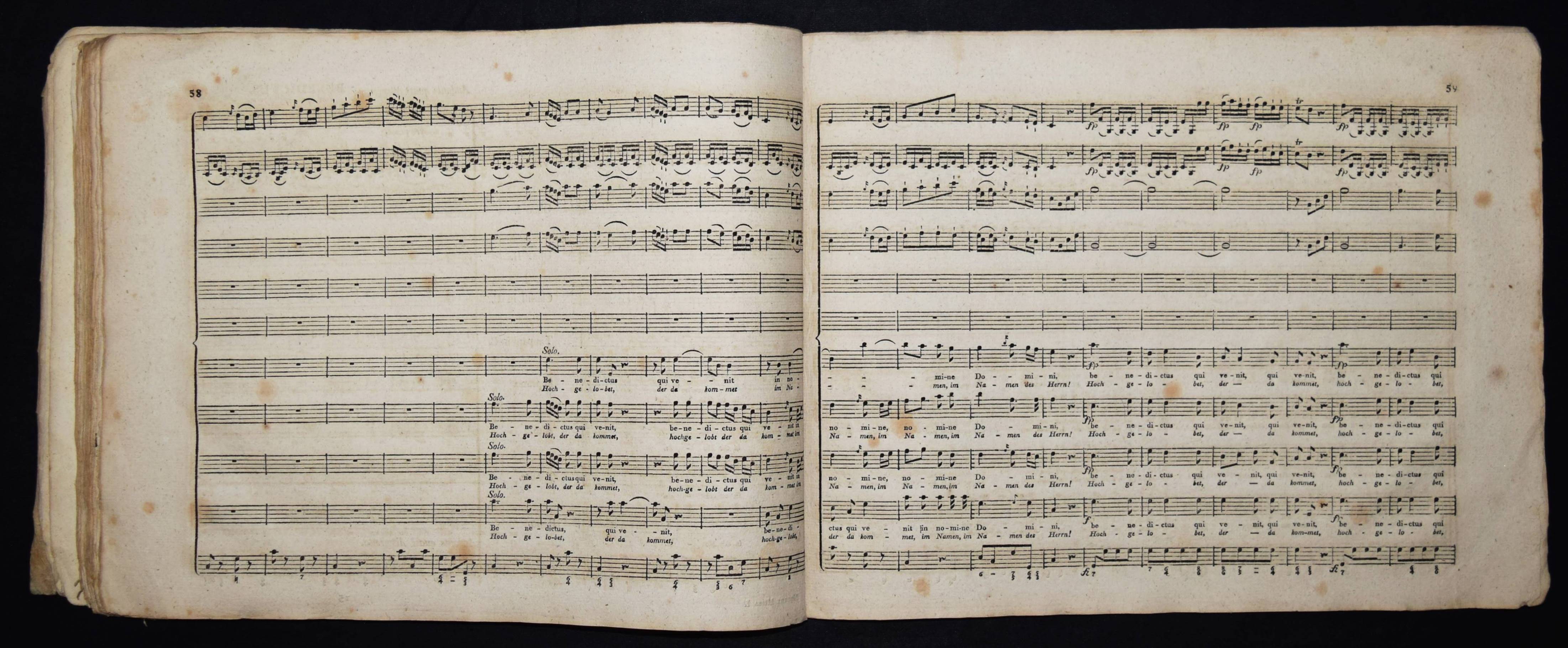
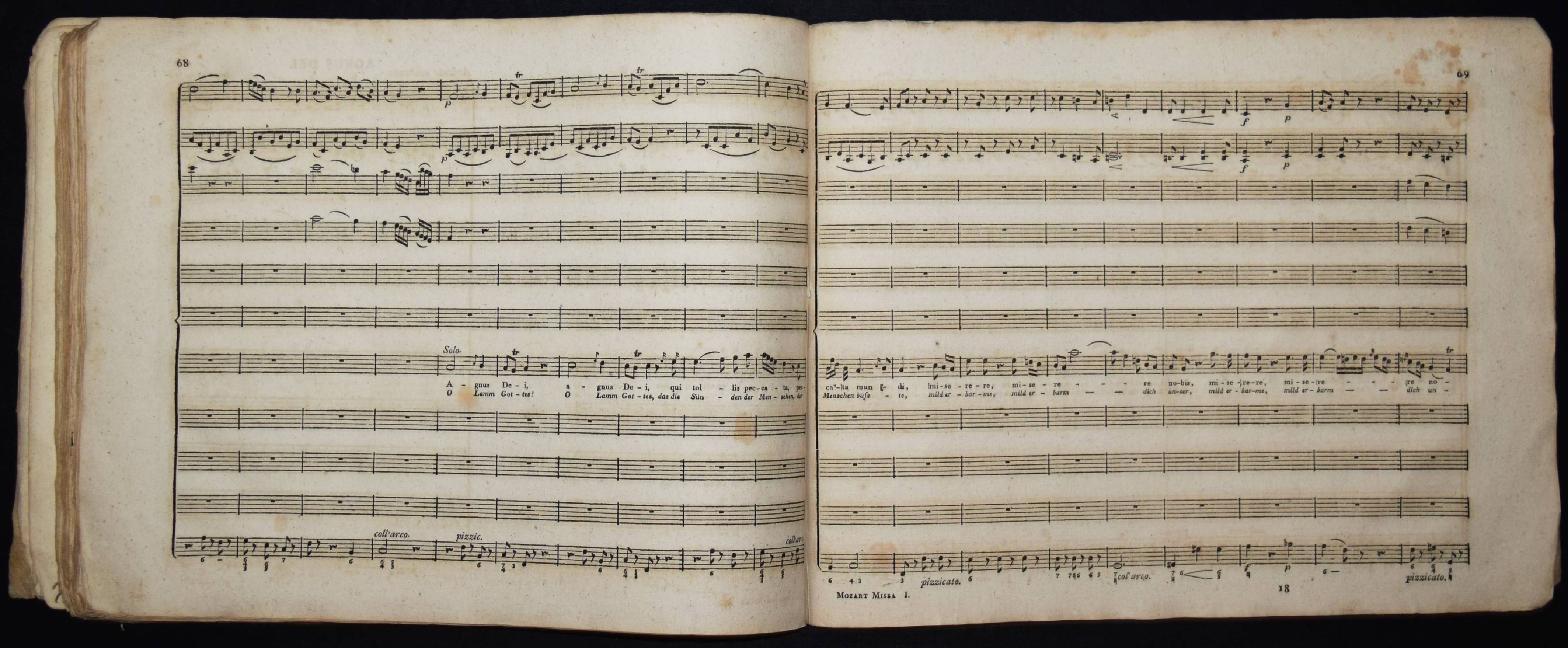
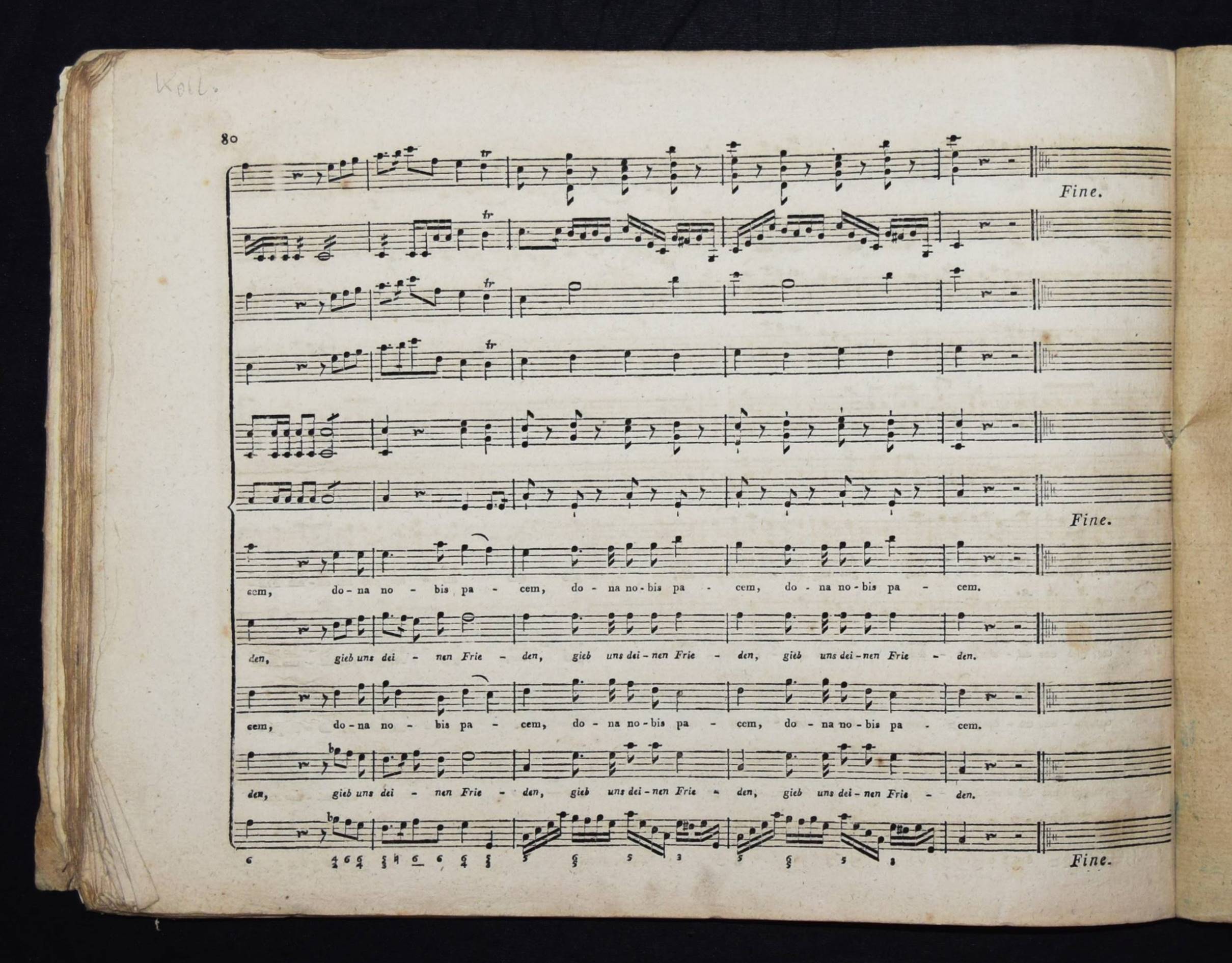
Mozart, Messe à 4 Voix avec accompagnement de 2 Violons et Basse

Mozart, Messe à 4 Voix avec accompagnement de 2 Violons et Basse

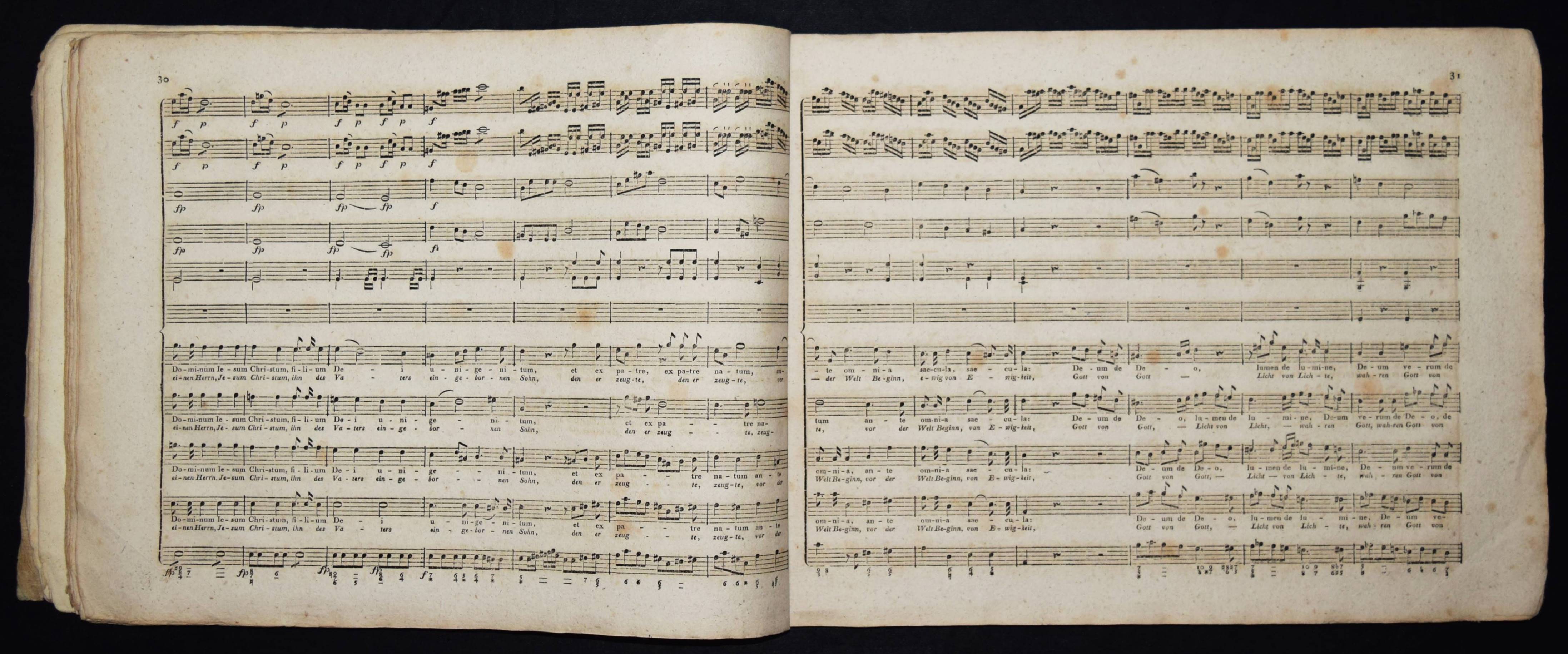
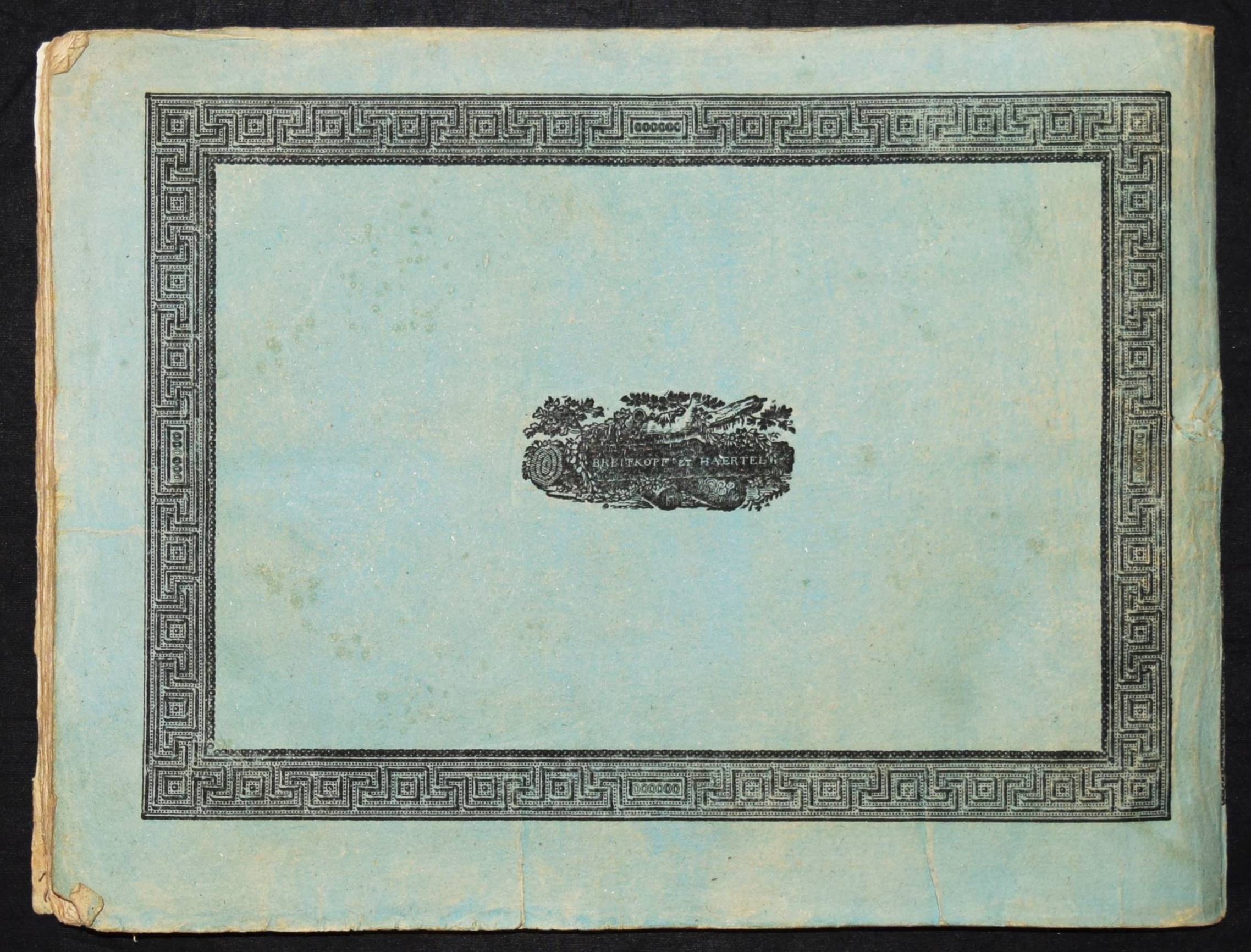
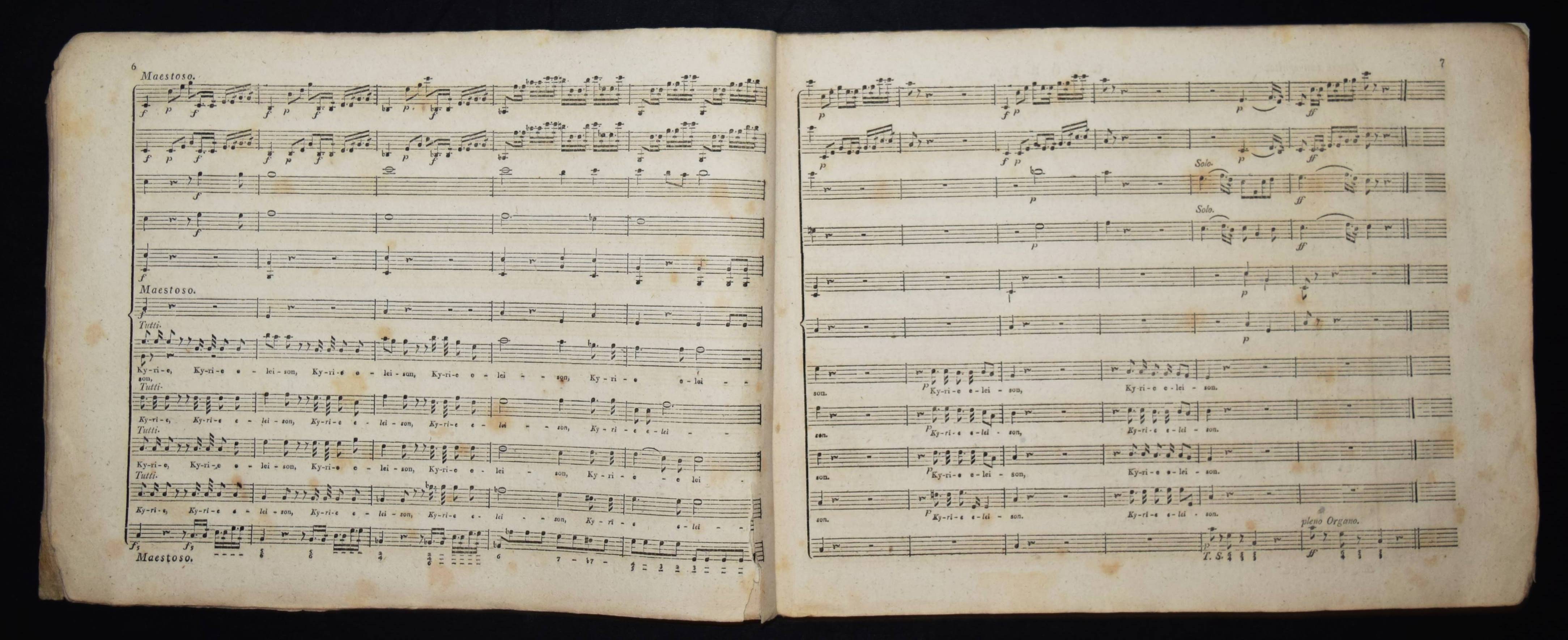
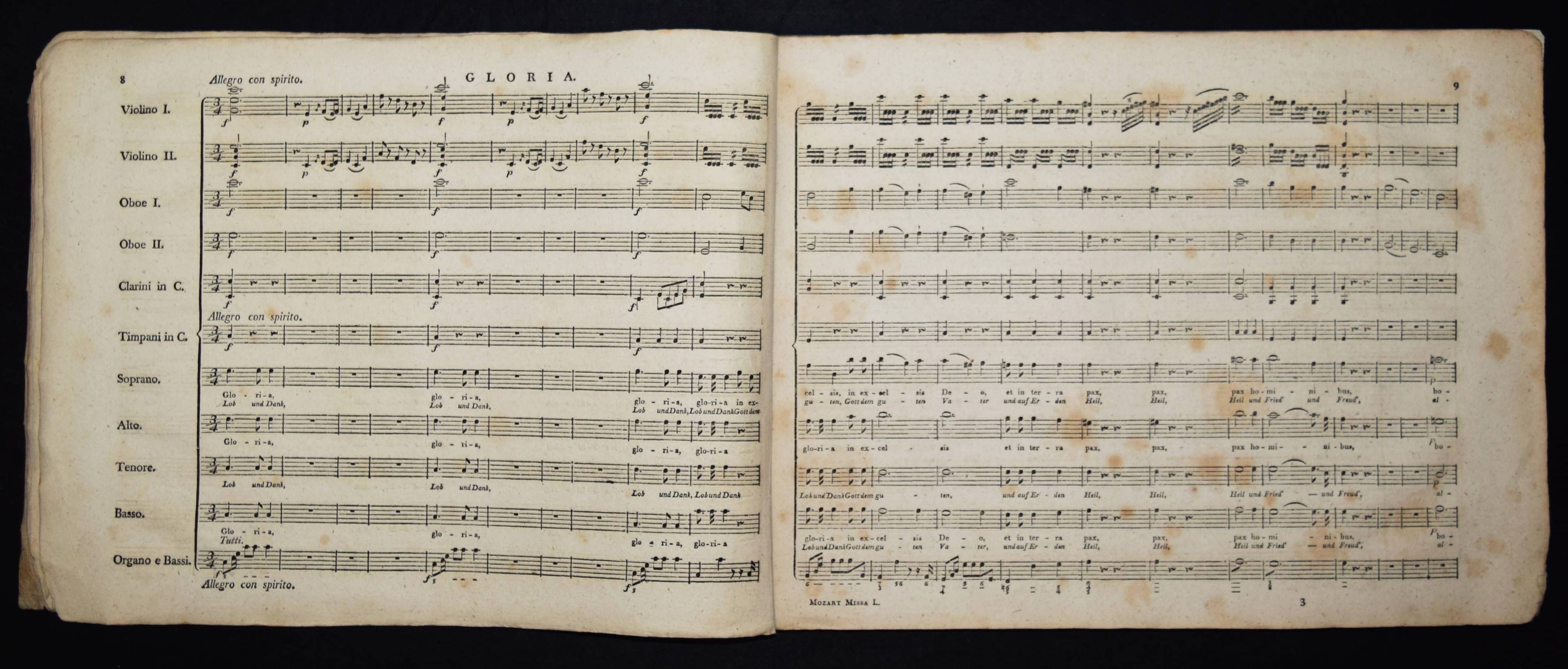
Mozart, Wolfgang Amadeus. Messe à 4 Voix avec accompagnement de 2 Violons et Basse, 2 Hautbois, 2 Trompettes, Timbales et Orgue. No. I. (Krönungsmesse, Partitur und Stimmen). Leipzig, Breitkopf & Härtel (1803). Quer-4°. 80 S. in Typendruck. Typogr. Orig.-Kartonumschlag. (KV 317).

RISM M/MM 7368. – Erste Ausgabe. – Erschien als Teil der Gesamtausgabe (Oeuvres completes II, Partitions, Cahier III). – „Der Name Krönungsmesse ist erstmals 1862 in der Erstauflage des Köchelverzeichnisses schriftlich nachgewiesen. Sehr wahrscheinlich wurde die Messe für den Ostergottesdienst 1779 am Salzburger Dom, der auf den 4. April fiel, komponiert. Mozart datierte die Partitur auf den 23. März 1779, womit er vermutlich die Fertigstellung der Komposition kennzeichnete. Unmittelbar nach Mozarts Tod wurde die Messe KV 317 zur bevorzugten Komposition für Gottesdienste bei Kaiser- und Königskrönungen sowie bei Dankgottesdiensten. Zum ersten Mal dürfte sie im Rahmen der Krönungsfeierlichkeiten für Kaiser Franz II. verwendet worden sein. Die wahrscheinlich ursprünglich kapellinterne Bezeichnung Krönungsmesse ist, von der Wiener Hofmusikkapelle ausgehend, bald Allgemeingut geworden. Der Umstand, dass die Mozarts der Wallfahrtskirche Maria Plain in tiefer Frömmigkeit verbunden waren, veranlasste 1907 den Mozart-Enthusiasten Johann Evangelist Engl zu der unbeweisbaren Feststellung, die Krönungsmesse sei für das alljährliche Maria-Plainer-Krönungsfest, das im Jahre 1779 am 27. Juni begann, komponiert worden – eine sich hartnäckig haltende Legende. Charakteristisch für diese Messe sind die sinfonischen Elemente. Solostimmen und Chor werden sehr deutlich voneinander getrennt. Besondere Bedeutung fällt auch der Oboe zu. Die Krönungsmesse besteht aus den folgenden Teilen des Ordinarium Missæ: Kyrie: Andante maestoso … Più andante – Gloria: Allegretto con spirito – Credo: Allegro molto – Adagio – Tempo I – Sanctus: Andante maestoso – Allegro assai (und dazugehörend:) Benedictus: Allegretto – Allegro assai – Agnus Dei: Andante sostenuto – Allegro con spirito. Besetzung: Streicher (ohne Bratschen), 2 Oboen, 2 Hörner,2 Trompeten, 3 Posaunen, Pauke, Basso continuo (Violoncello/Fagott/Kontrabass/Orgel), Solisten: Sopran, Alt, Tenor, Bass, Chor SATB“ (Wikipedia). – Umschlag etwas berieben, stellenweise etwas braunfleckig, sehr gutes Exemplar im Originalumschlag.
First edition. – Published as part of the complete works (Oeuvres complètes II, Partitions, Cahier III). – “The name ‘Coronation Mass’ first appears in writing in the first edition of the Köchel Catalogue in 1862. It is highly likely that the Mass was composed for the Easter service in 1779 at Salzburg Cathedral, which fell on 4 April. Mozart dated the score 23 March 1779, presumably marking the completion of the composition. Immediately after Mozart’s death, the Mass K. 317 became the preferred composition for services at imperial and royal coronations, as well as at thanksgiving services. It is thought to have been used for the first time during the coronation celebrations for Emperor Franz II. The term ‘Coronation Mass’ – which was probably originally an internal designation within the court orchestra – soon became common knowledge, originating from the Vienna Court Orchestra. The fact that the Mozarts were deeply devout and had close ties to the pilgrimage church of Maria Plain led the Mozart enthusiast Johann Evangelist Engl, in 1907, to make the unverifiable claim that the Coronation Mass had been composed for the annual Maria Plain Coronation Festival, which began on 27 June 1779 – a legend that has persisted to this day. This Mass is characterised by its symphonic elements. The solo parts and the choir are very clearly distinguished from one another. The oboe also plays a particularly important role. The Coronation Mass consists of the following parts of the Ordinarium Missæ: Kyrie: Andante maestoso … Più andante – Gloria: Allegretto con spirito – Credo: Allegro molto – Adagio – Tempo I – Sanctus: Andante maestoso – Allegro assai (and associated with this:) Benedictus: Allegretto – Allegro assai – Agnus Dei: Andante sostenuto – Allegro con spirito. Instrumentation: strings (without violas), 2 oboes, 2 horns, 2 trumpets, 3 trombones, timpani, basso continuo (cello/bassoon/double bass/organ), soloists: soprano, alto, tenor, bass, SATB choir” (Wikipedia). – Cover slightly worn, with some brown spots in places; a very good copy in its original cover.

Unser Preis: EUR 1.000,-- 

1
2
3
4
5
6
7
9
91
92
93