


Rich, Memoir on the ruins of Babylon
Rich, Memoir on the ruins of Babylon
|
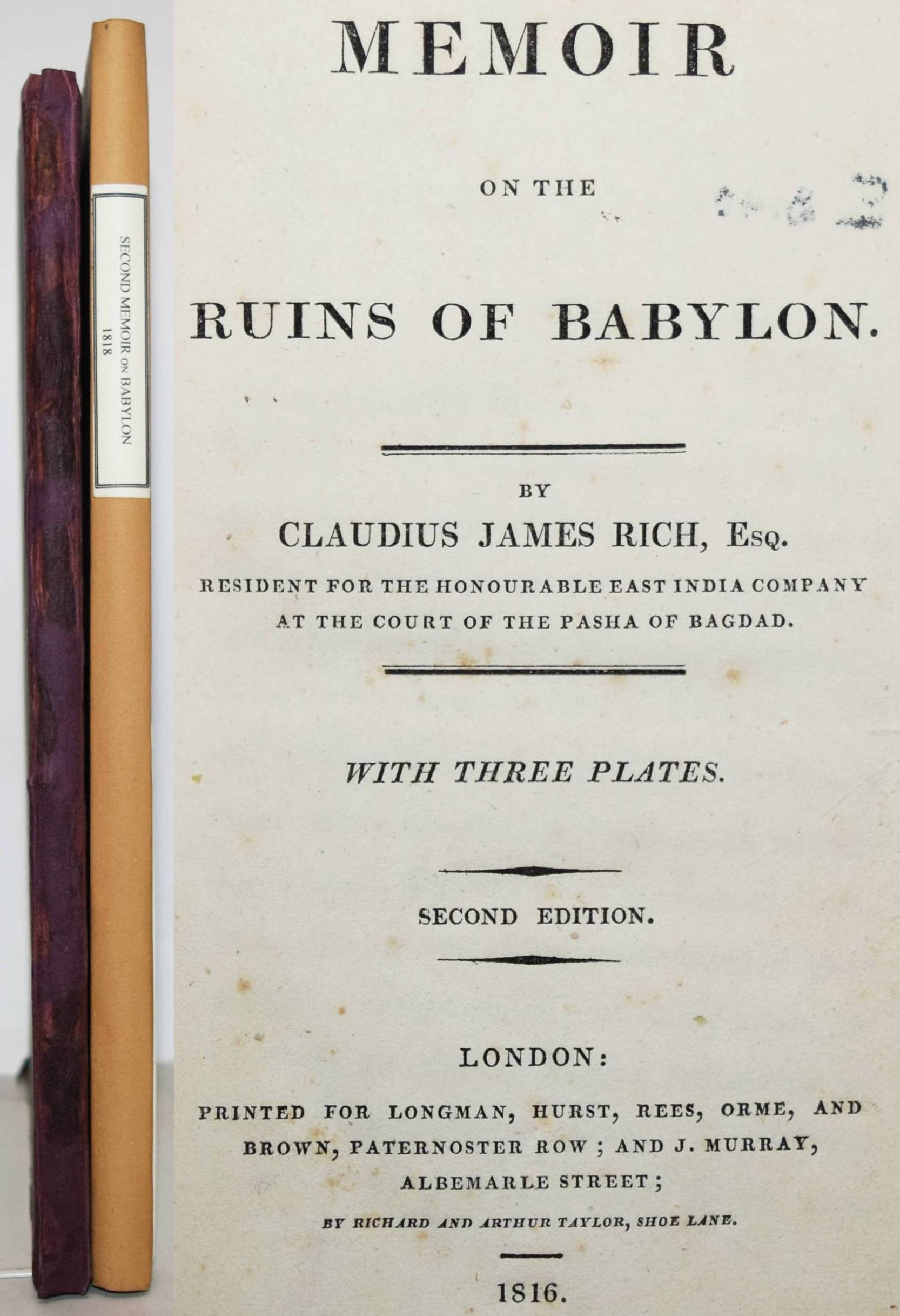
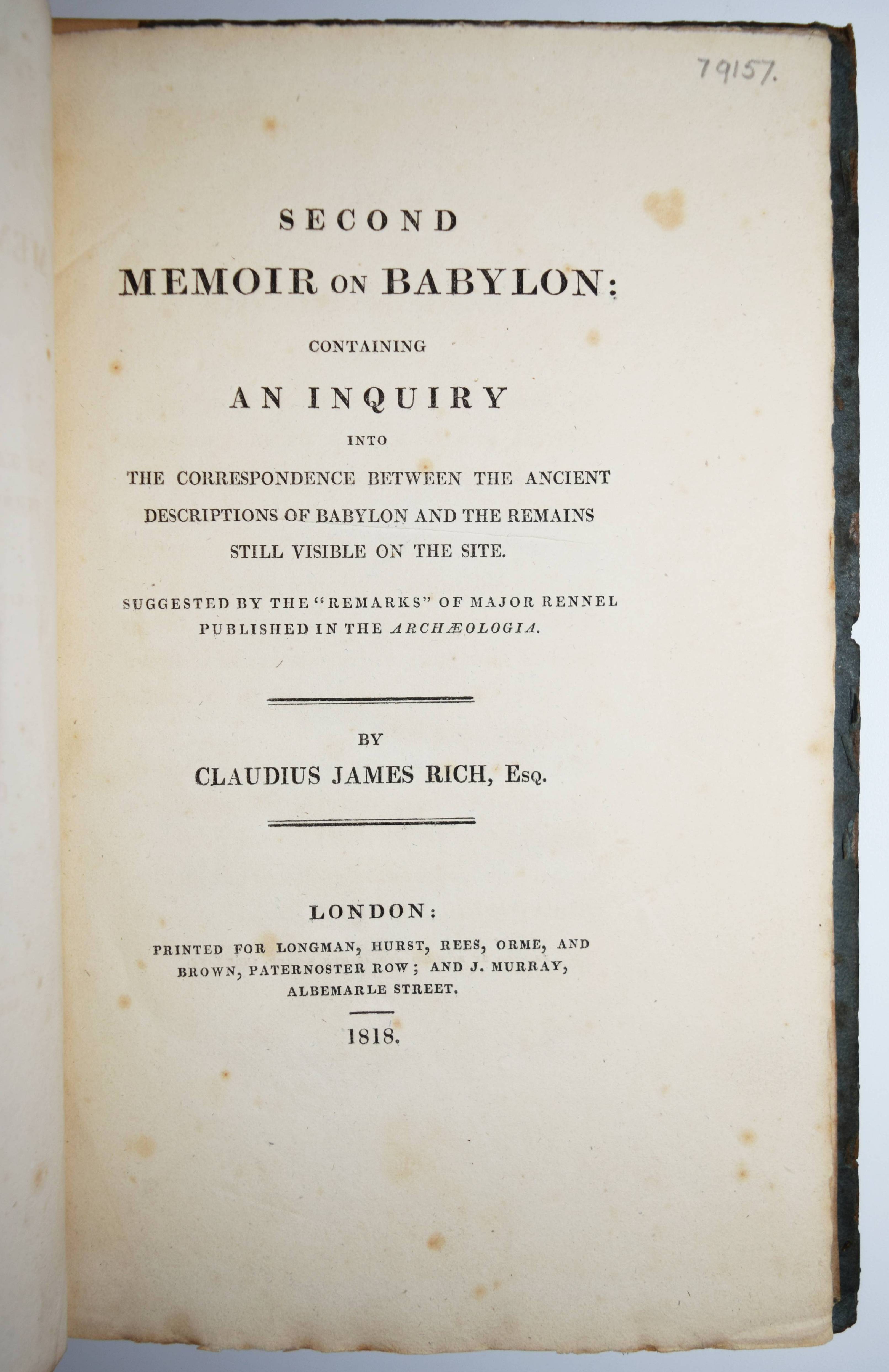
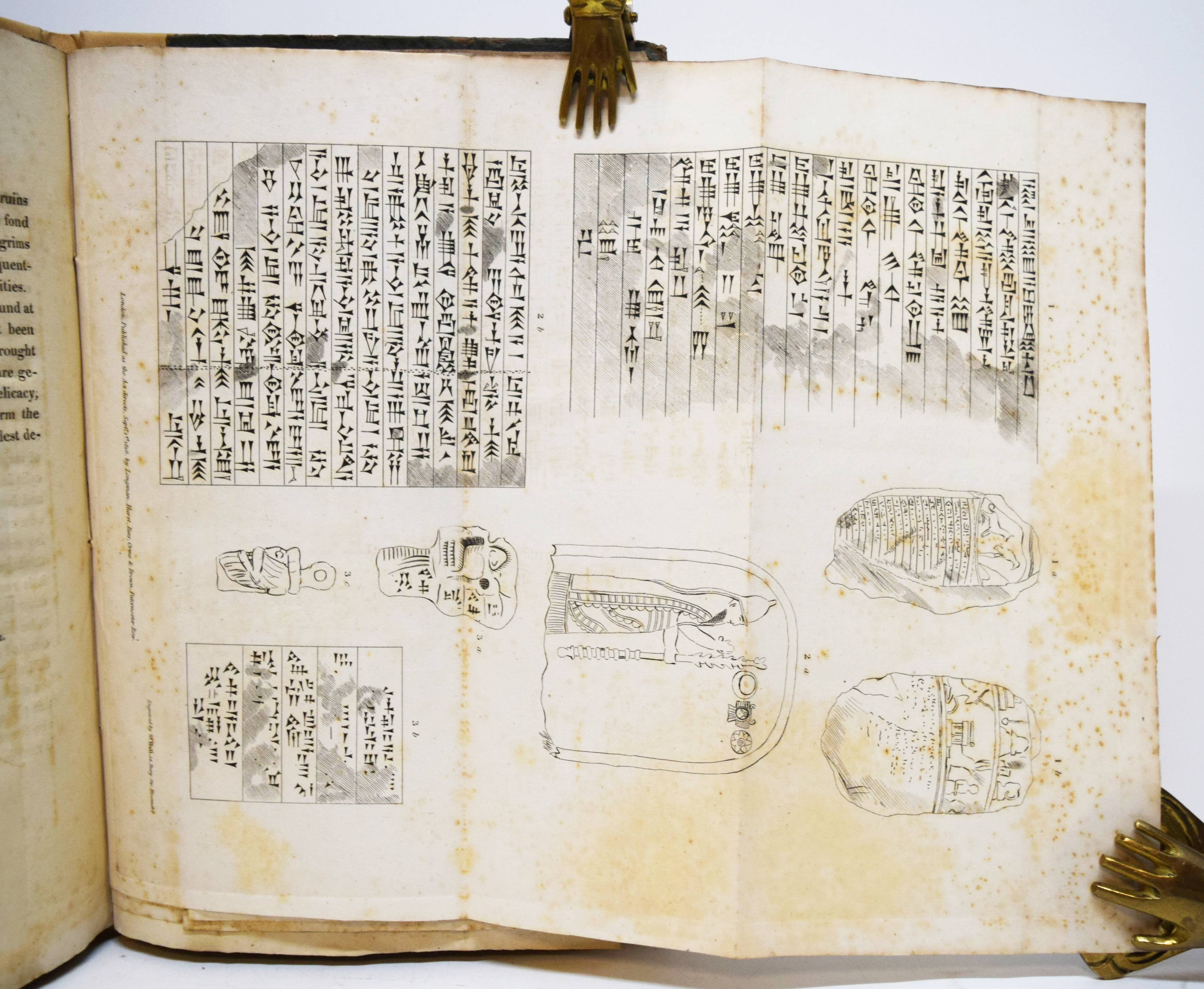
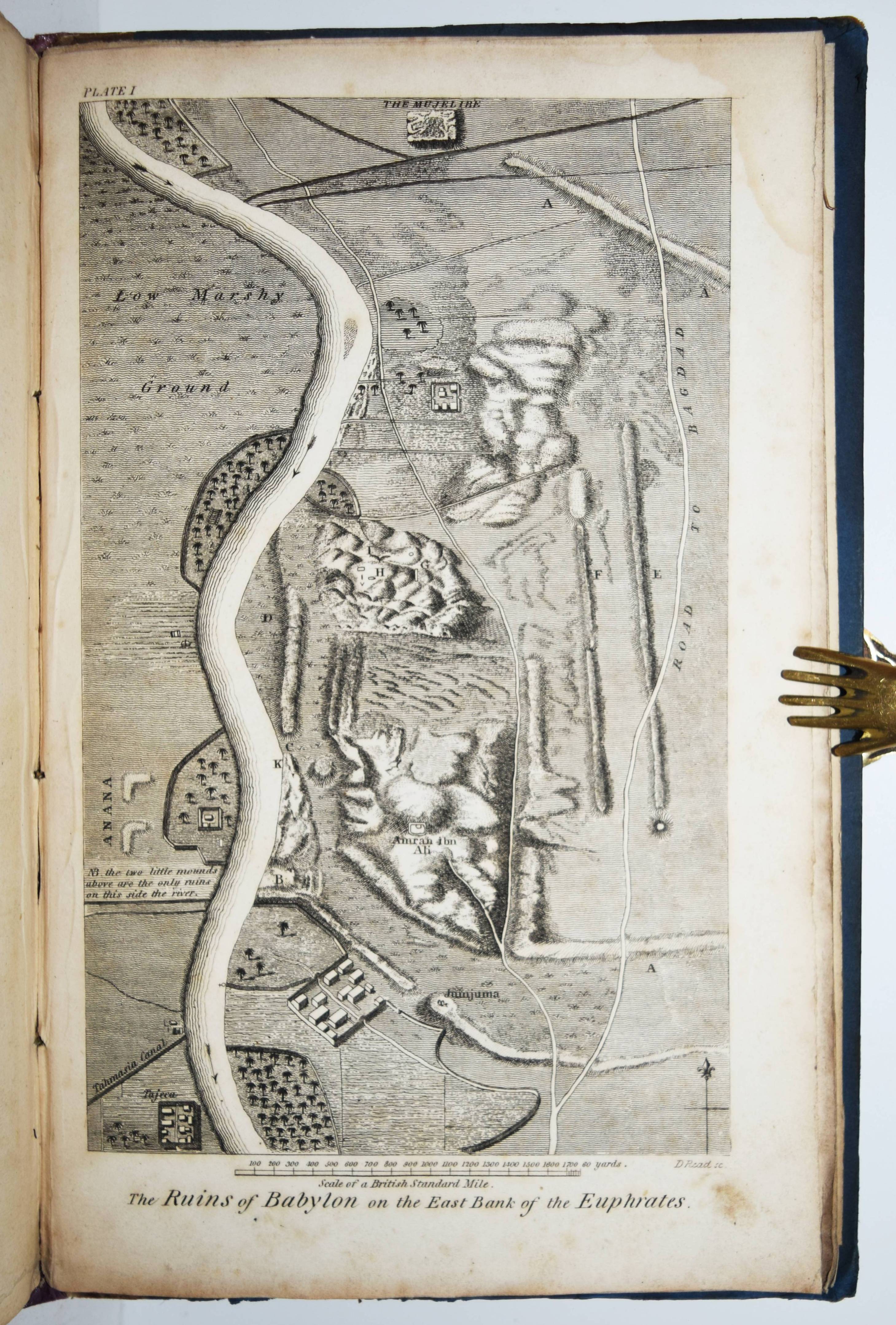
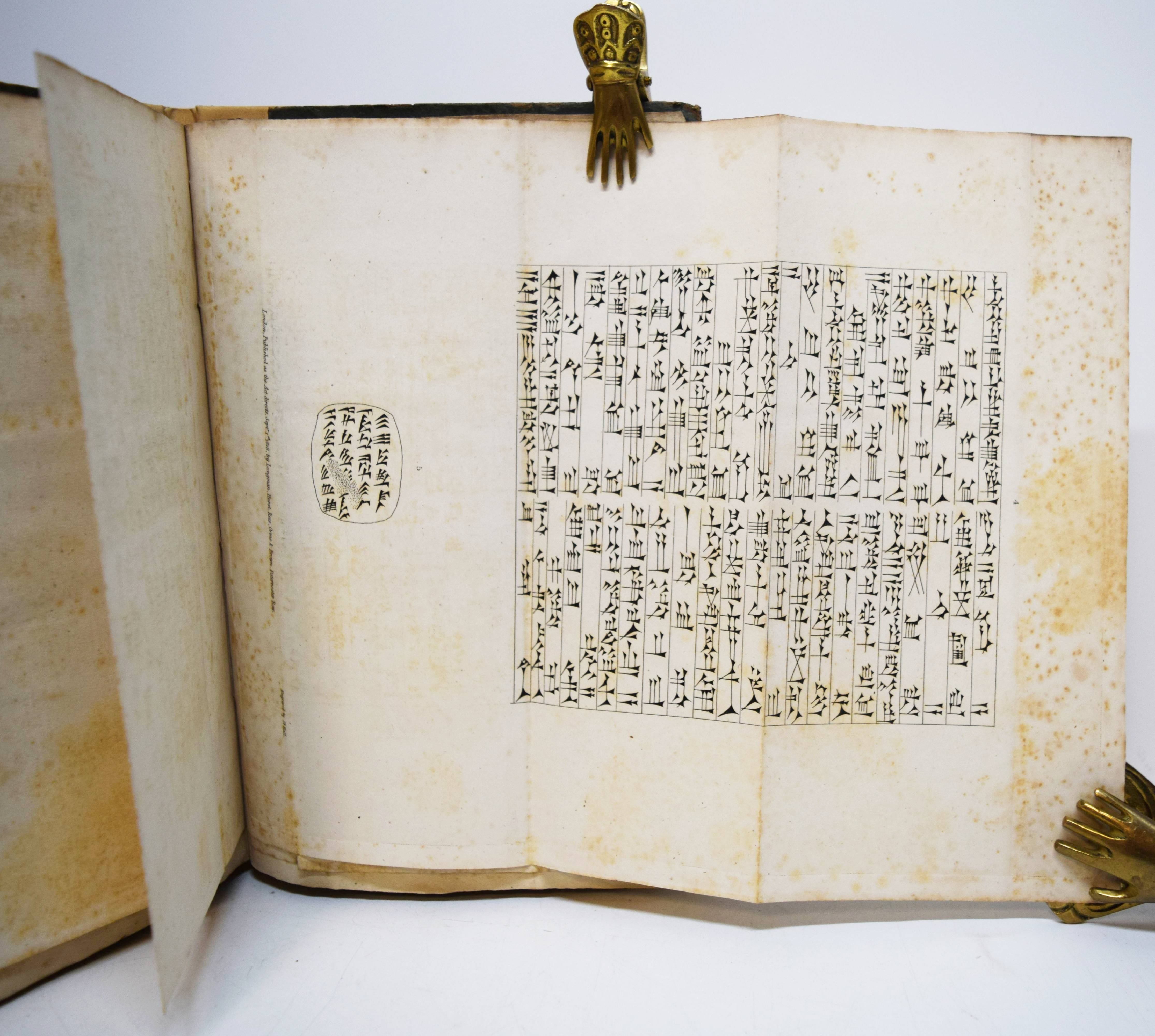
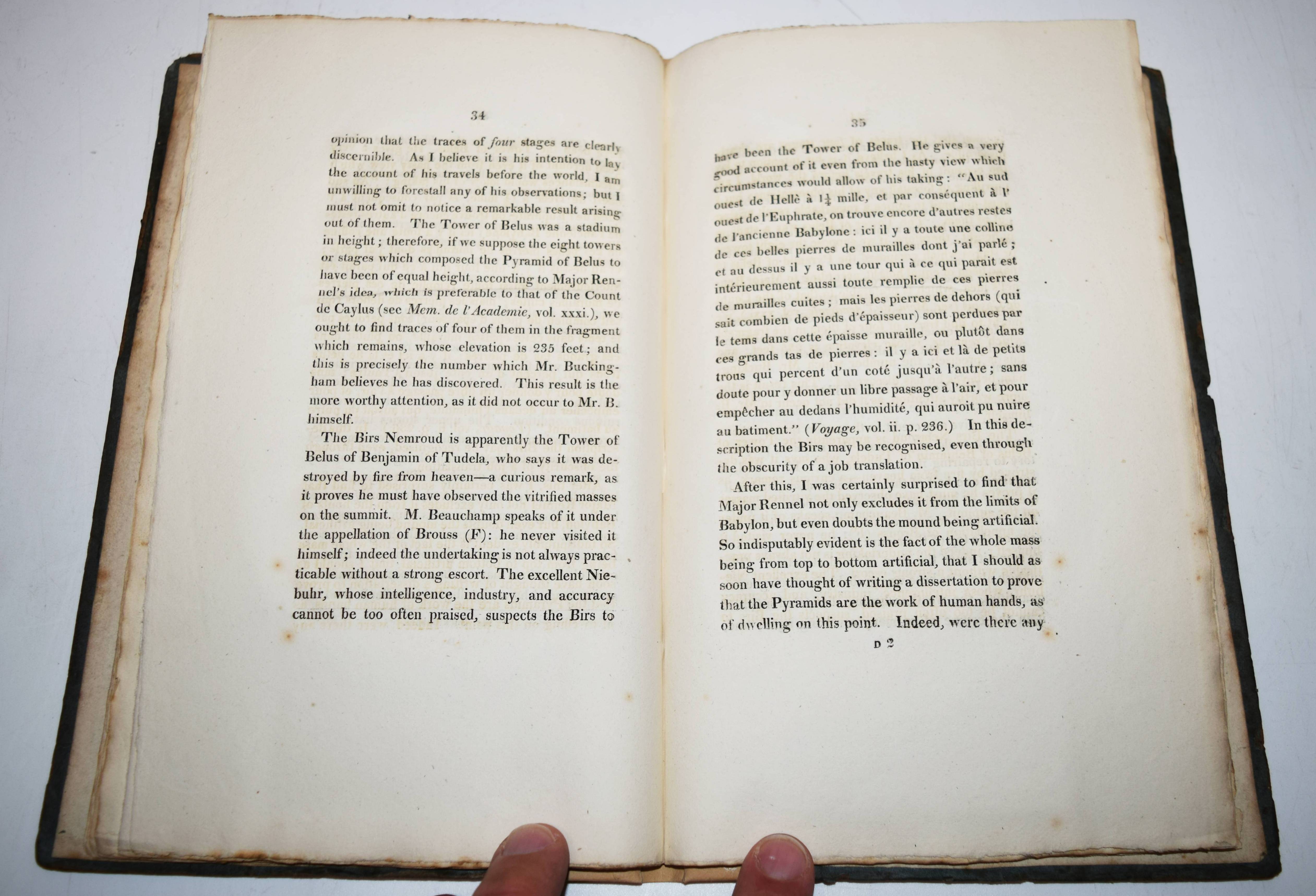
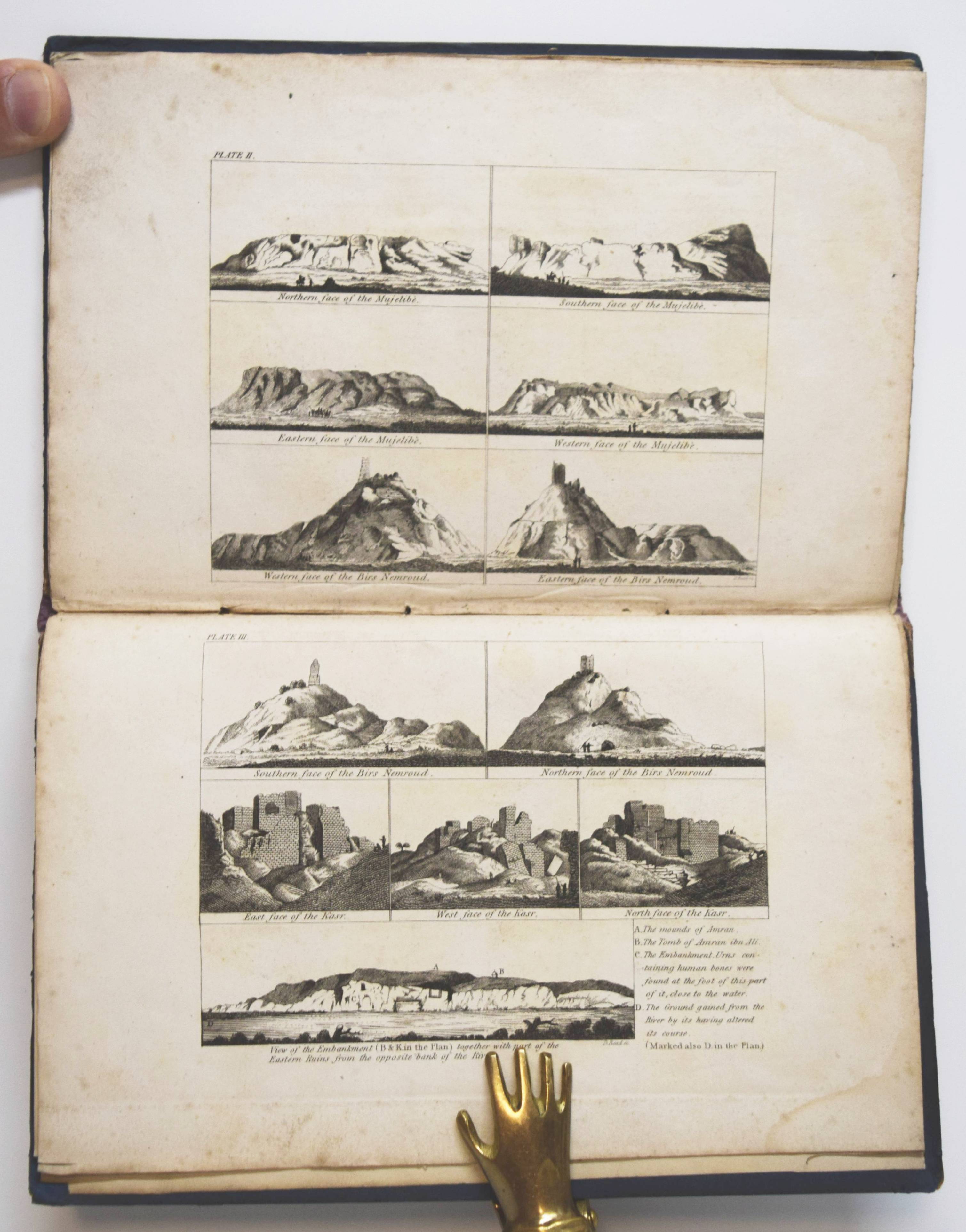
Rich, Claudius James. Memoir on the ruins of Babylon. (And): Second memoir on Babylon containing an inquiry into the correspondence between the ancient descriptions of Babylon and the remains still visible on the site. Sugested by the „Remarks“ of Major Rennel published in the Archaeologia. Second edition and first edition. 2 volumes. London, Longman, Hurst, Orme, and Brown 1816 and 1818. Gr.-8° (24,5 x 15,5 cm.). IV, 67, (1) p.; [2], 60 p. with 6 (3 folded) engraved plates. Contemporary cardboard bindings. DNB XLVIII, 114 ff. Zenker, Bibliotheca Orientalis II, 535 and 536. – Very rare set of Rich’s famous archaeological investigations on the ruins of Babylon. – “As early as the age of nine [Rich’s] curiosity was aroused by some Arabic manuscripts, and he applied himself with eagerness to various oriental languages… Before he was 24 he was appointed the East India Company’s resident at Baghdad… For six years he lived at Baghdad, collecting materials in his leisure time for a history and statistical account of the Pashalik… An excursion to Babylon in 1811 bore fruit in the Memoir on the Ruins of Babylon, originally contributed to the ‘Mines d’Orient,’ but reprinted at London in 1815, and amplified, after a second visit to the site, in the Second Memoir on Babylon” (DNB). – „When he visited the ruins of ancient Babylon on 10 December 1811, a new passion for antiquity was kindled within him, to which he would devote all his energy. In 1812, he carried out surveys and excavations in Babylon and the surrounding area, which he published two years later in the form of a topographical study in *Fundgruben*, a journal edited in Vienna by his personal friend Joseph von Hammer-Purgstall. Following a dispute with Major Rennell, they agreed on the location of the ruins of Babylon on the eastern bank of the Euphrates, and Rich incorporated his suggestions into „A Second Narrative“. … Rich discovered a number of small objects from sarcophagi near the ‘Mujelibé’ (palace) and excavated the ‘Lion of Babylon’, which the Australian Henry Layard was to rediscover 40 years later. He also dug a shaft into the hill at Tell Ibrahim Khalil and collected inscribed mud bricks. … Although he spent only 10 days in Babylon, he uncovered numerous artefacts that were to occupy scholars for a long time to come“ (Wikipedia). – The spine of the second volume has been professionally repaired; both volumes bear bookplates; slightly stained in places, but otherwise in good condition.
Unser Preis: EUR 1.000,-- |
|