



Evans-Wentz, The Tibetan book of the great liberation
Evans-Wentz, The Tibetan book of the great liberation
|
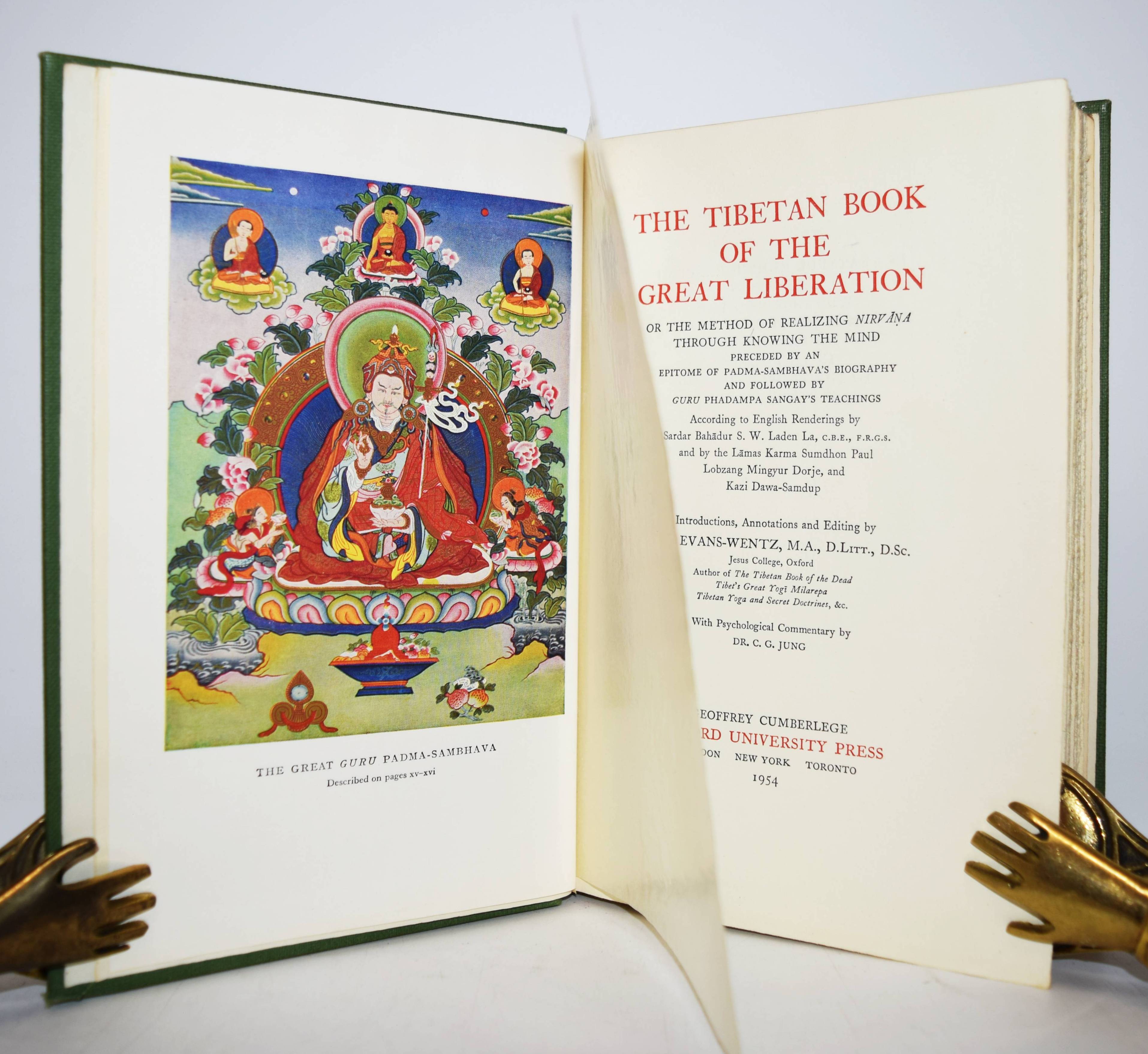
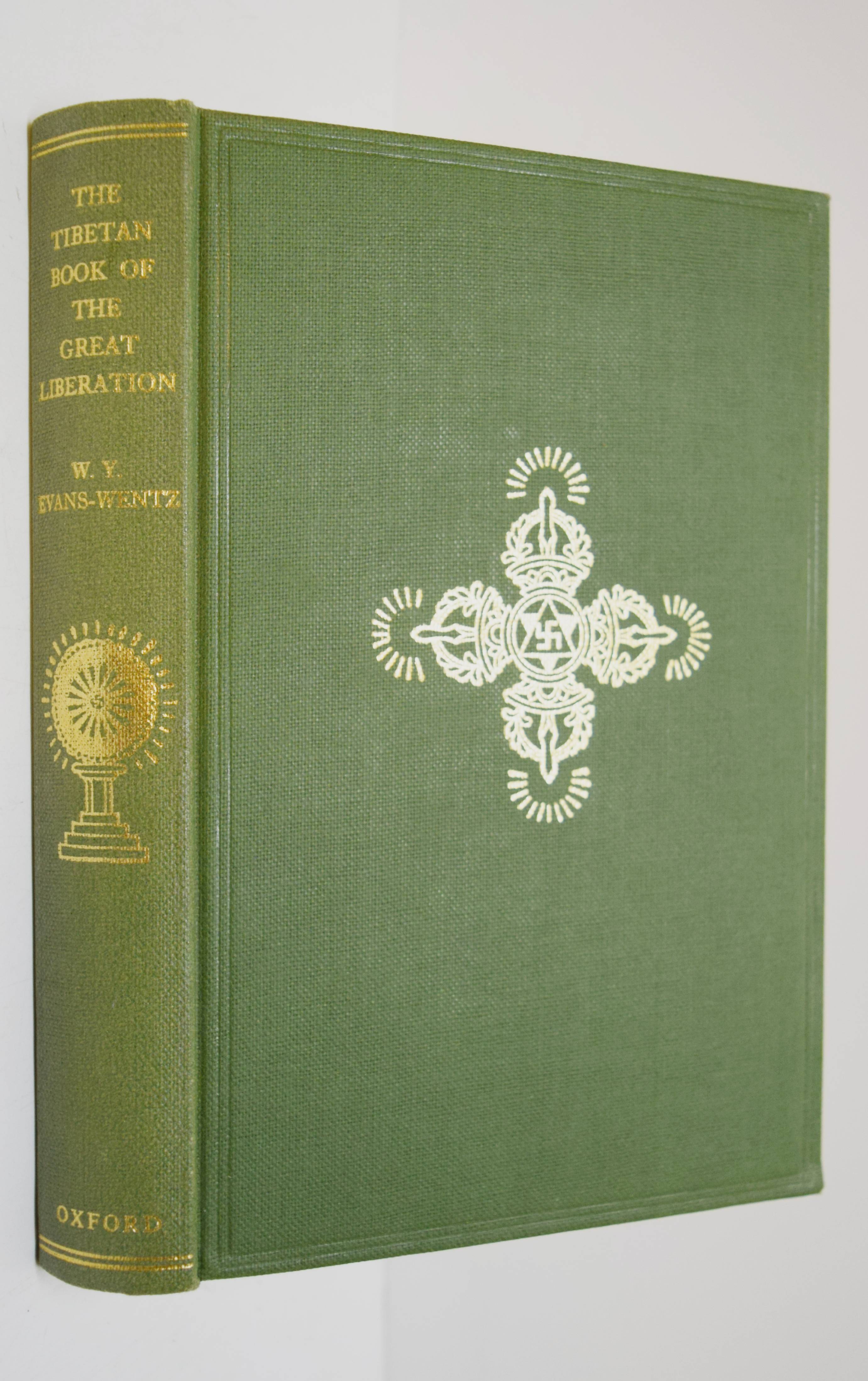
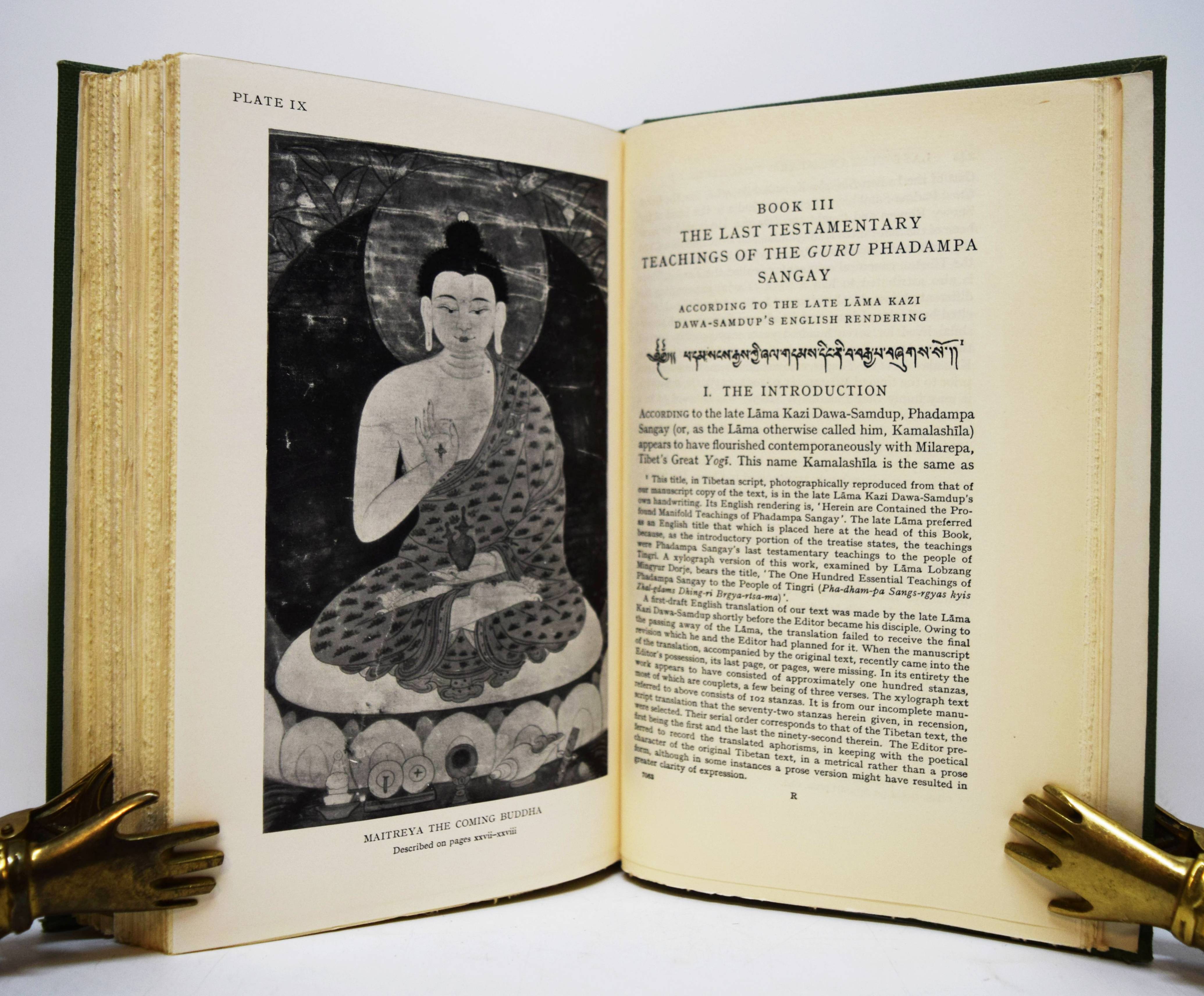
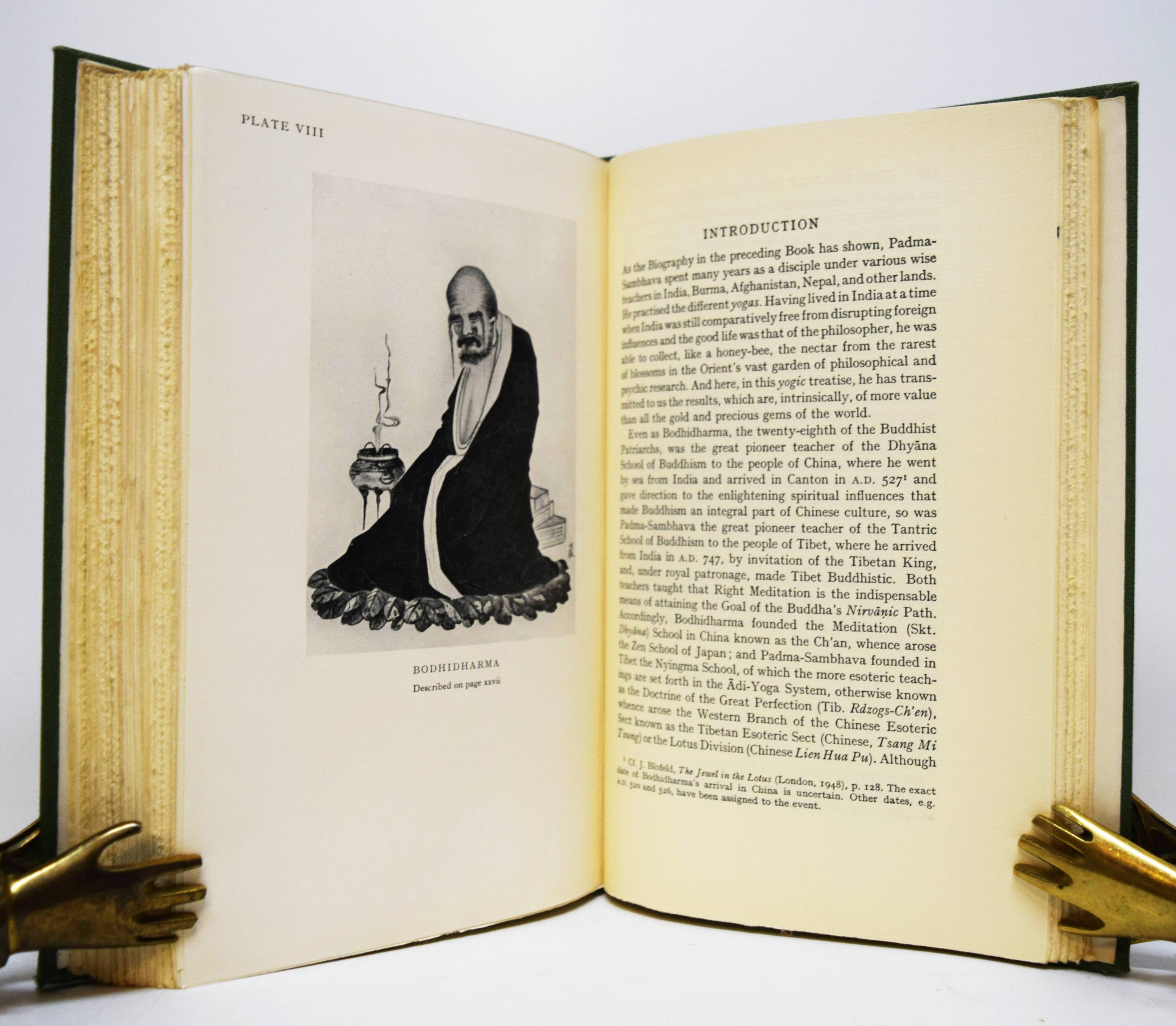
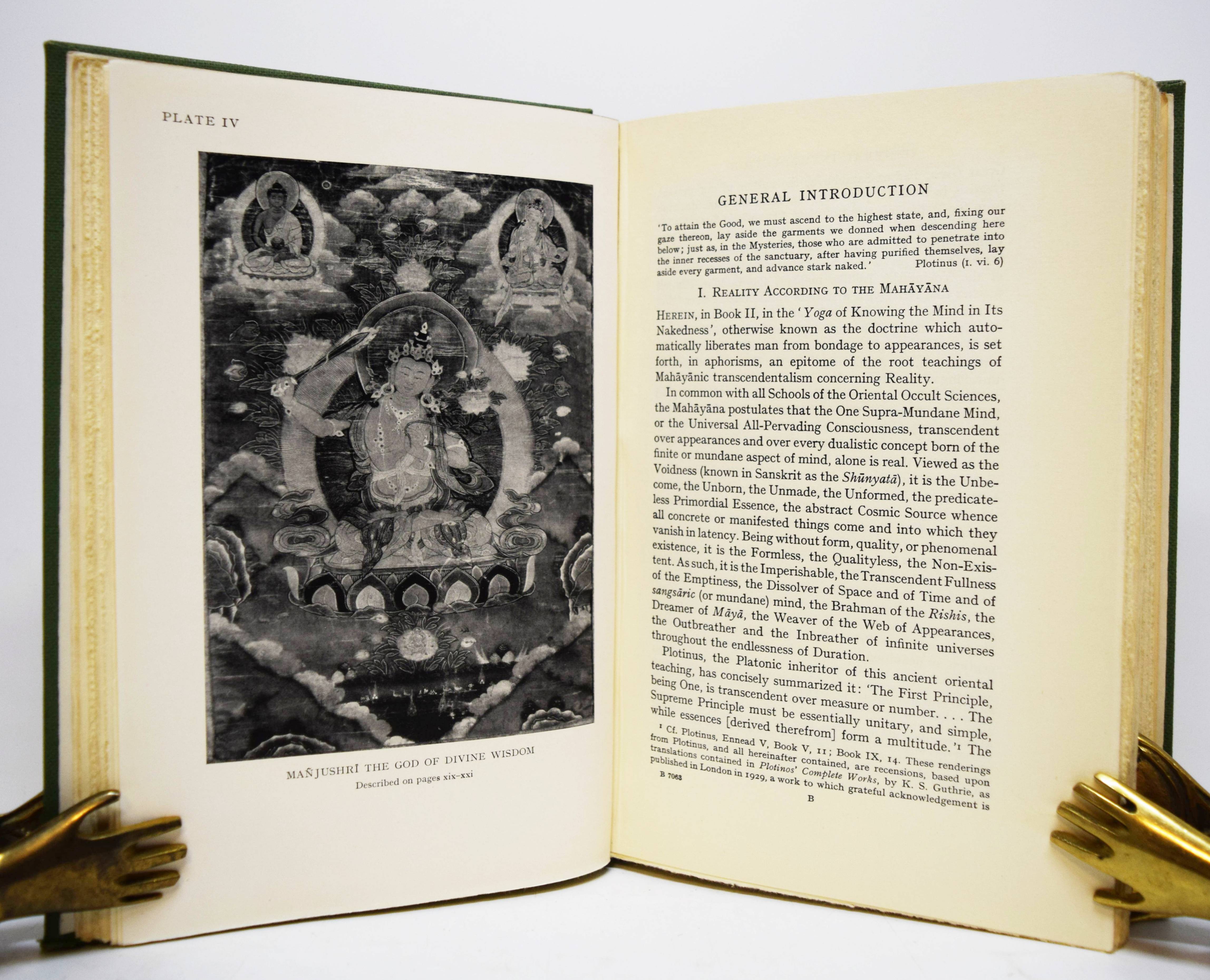
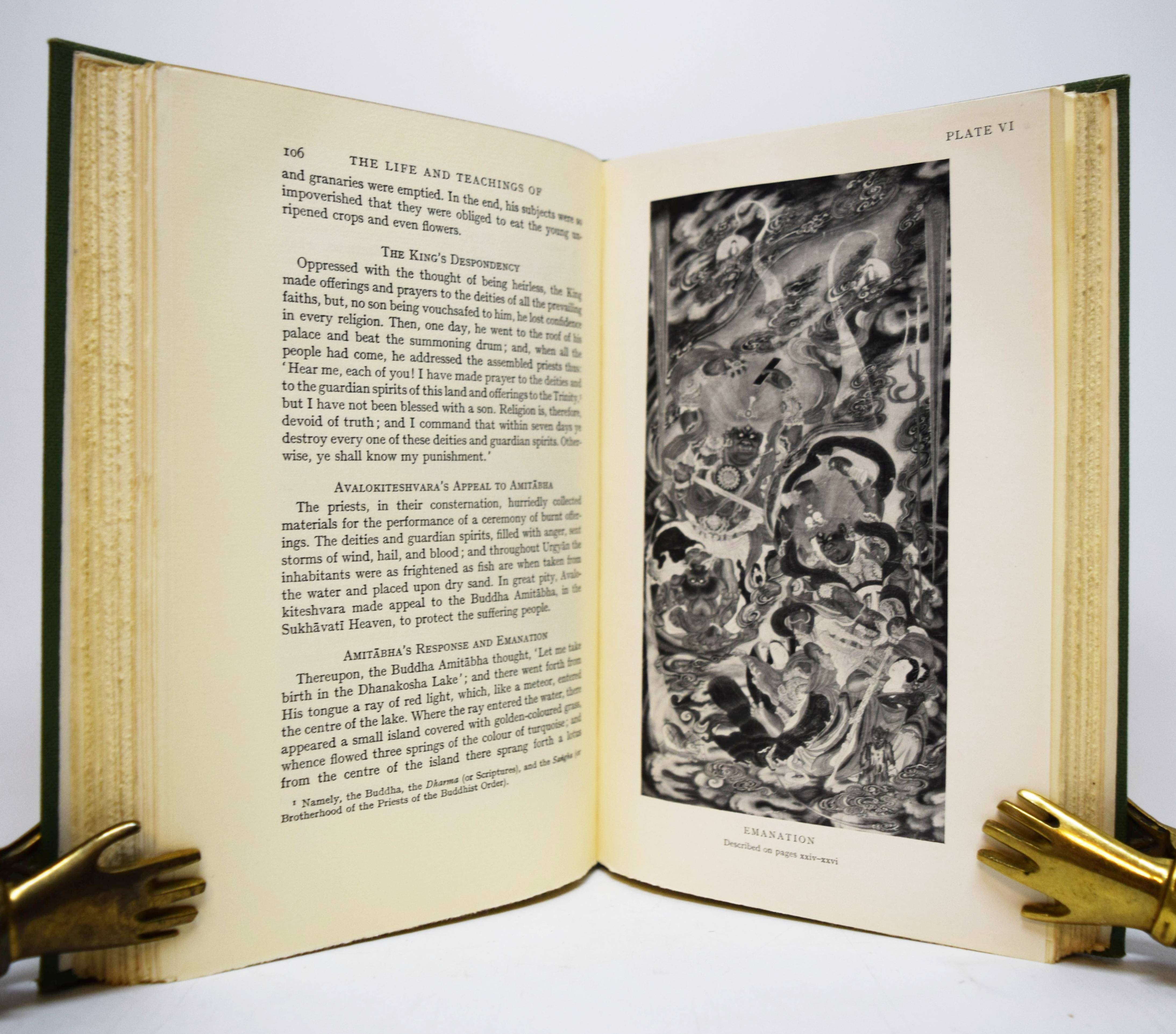
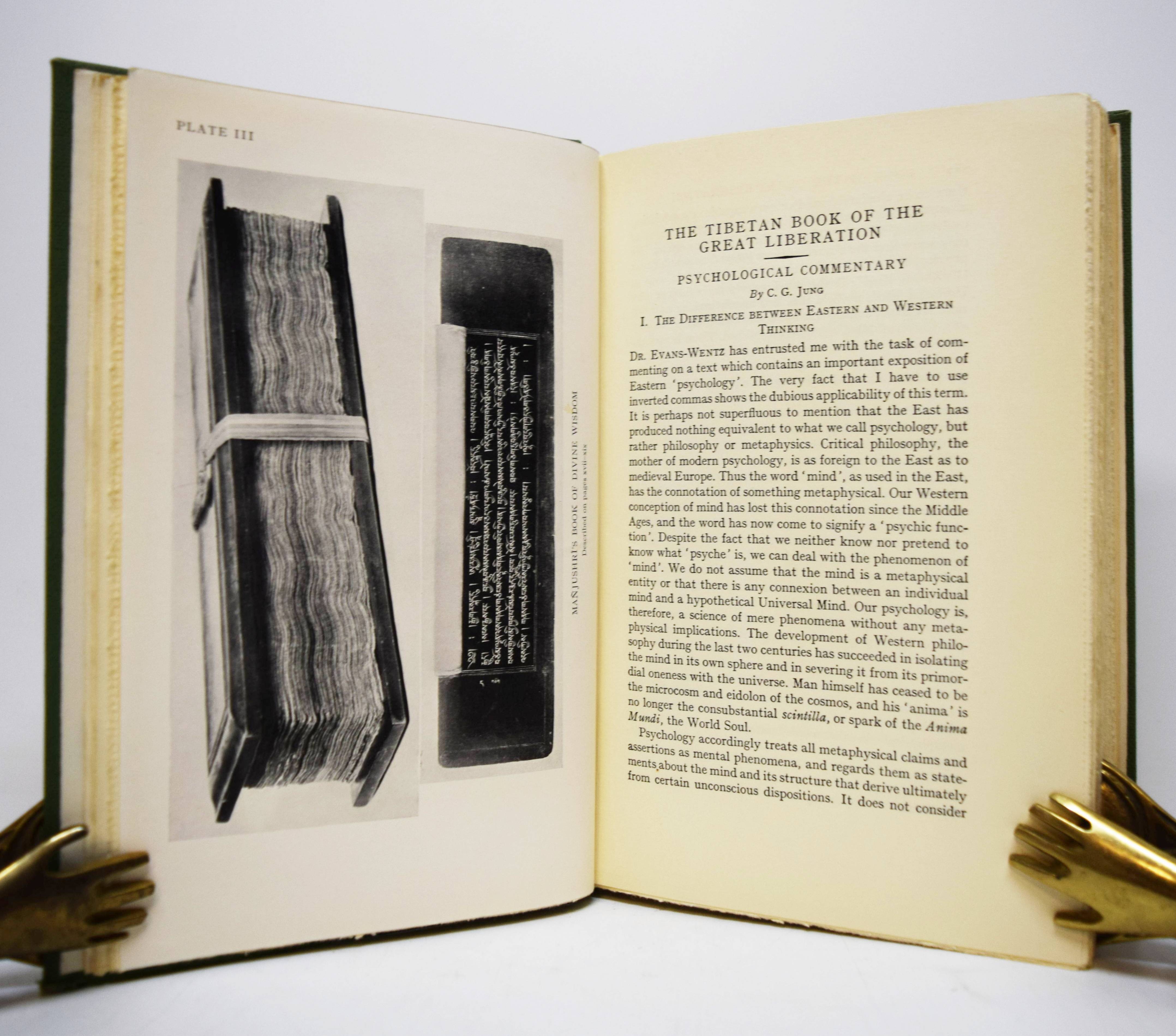
Evans-Wentz, W(alter) Y(eeling, Hrsg.). The Tibetan book of the great liberation. Or the method of realizing Nirvana through knowing the mind. Preceded by an epitome of Padma-Sambhava’s biography and followed by Guru Phadampa Sangay’s teachings. According to English renderings by Sardar Bahadur S. W. Laden La, and by the Lamas Karma Sumdhon Paul, Lobzang Mingyur Dorje, and Kazi Dawa-Samdup. With psychological commentary by C(arl) G(ustav) Jung. London, New York, Toronto, Oxford University Press, Geoffrey Cumberlege 1954. 8°. LXIV, 261, (1) pp., with a colour frontispiece and 8 plates. Original linen binding with a gold-stamped title on the spine and a vignette on the cover. First edition. – The American anthropologist W. Y. Evans-Wentz (1878-1965) „was a pioneer in the study of Tibetan Buddhism, and in transmission of Tibetan Buddhism to the Western world. … In 1927, The Tibetan Book of the Dead was published by Oxford University Press. Evans-Wentz chose the title „Book of the Dead“ because it reminded him of the Egyptian Book of the Dead. For Westerners, the book would become a principal reference on Tibetan Buddhism. Evans-Wentz credited himself only as the compiler and editor of these volumes; the actual translation was performed by Tibetan Buddhists, primarily Lama Kazi Dawa-Samdup. Evans-Wentz’s interpretations and organisation of this Tibetan material is hermeneutically controversial, being influenced by preconceptions he brought to the subject from Theosophy and other metaphysical schools. This book was followed by Tibet’s Great Yogi Milarepa (1928), also based on Samdup’s translations. Evans-Wentz was a practitioner of the religions he studied. He became Dawa-Samdup’s „disciple“ (E-W’s term), wore robes, and ate a simple vegetarian diet. In 1935, he met Ramana Maharshi and went to Darjeeling, where he employed three translators, Sikkimese of Tibetan descent, to translate another text which was published as Tibetan Yoga and Secret Doctrines (1935). Evans-Wentz intended to settle permanently in India, but was compelled by World War II to return to the U.S. There he would publish The Tibetan Book of the Great Liberation in 1954. A final work, Cuchama and Sacred Mountains (1989), was published posthumously. In 1946, he wrote the preface to Yogananda’s well known Autobiography of a Yogi, that introduced both Yogananda and himself to wider audiences in a book which has been in print for over sixty-five years and translated into at least thirty-four languages. He mentions having personally met Yogananda’s guru, Swami Sri Yukteswar Giri, at his ashram in Puri and noted positive impressions of him. Evans-Wentz remains best known for his lasting legacy to Tibetology“ (Wikipedia). – A very fine, clean copy.
Unser Preis: EUR 120,-- |
|