NEUER E-KATALOG: Neueingänge Oktober 2026 – Wir stellen aus: VIENNA VINTAGE PHOTO FAIR X-MAS EDITION 2026. So. 13. 12. 11-18 Uhr. WestLicht, Westbahnstrasse 40, 1070 Wien – BÜCHERSONNTAG – Börse für antiquarische Bücher in der Wohnung Löwenbach (Adolf Loos), 17. Januar 2027, Reischachstr. 3, 1010 Wien, 10.00 – 17.00 Uhr – 64. Antiquariatsmesse Stuttgart 29.-31. Januar 2027, Württembergischer Kunstverein, Schloßplatz. www.antiquariatsmessestuttgart.com – Art Karlsruhe, 18. bis 21. Februar 2027 (Preview am 17. Februar 2027), Messe Karlsruhe. – Gemeinschaftskatalog zusammen mit Antiquariat Norbert Knöll, Lüneburg: POPKULTUR / POP CULTURE Bücher, Fotografien, Schallplatten und Graphik. – PHOTOGRAPHIE / PHOTOGRAPHY – wichtige Fotobücher von 1839 bis heute, darunter zahlreiche Widmungsexemplare und Bücher mit Orig.-Photographien (kann unter „Aktuelle Kataloge“ abgerufen werden). – Außerdem finden Sie Beiträge von uns im virtuellen „Schaufenster“ des Verbandes Deutscher Antiquare (VDA) [https://schaufenster.antiquare.de/trefferliste.php?ID=22] (oder über „Links“ VDA) – Versandkosten ins Ausland auf Anfrage. – Besuchen Sie uns in unserem neuen Ladengeschäft in der Kaiserstrasse 99 in Karlsruhe (Mo.-Fr. 11-18 Uhr, Sam. 11-16 Uhr) mit einer reichen Auswahl seltener und schöner Bücher aus allen Gebieten, Graphik und Photographien. – Instagram: rarebookskarlsruhe – NEW E-CATALOGUE: New arrivals October 2026 – We are exhibiting at: VIENNA VINTAGE PHOTO FAIR X-MAS EDITION 2026. Sun 13 Dec, 11am–6pm. WestLicht, Westbahnstrasse 40, 1070 Vienna – BOOK SUNDAY – Second-hand book fair at the Löwenbach House (Adolf Loos), 17 January 2027, Reischachstr. 3, 1010 Vienna, 10.00 am – 5.00 pm – 64th Stuttgart Antiquarian Book Fair, 29–31 January 2027, Württembergischer Kunstverein, Schloßplatz. www.antiquariatsmessestuttgart.com – Art Karlsruhe, 18–21 February 2027 (preview on 17 February 2027), Karlsruhe Exhibition Centre. – Joint catalogue with Antiquariat Norbert Knöll, Lüneburg: POP CULTURE – books, photographs, records and prints. – PHOTOGRAPHY – important photobooks from 1839 to the present day, including numerous signed copies and books containing original photographs (available under ‘Aktuelle Kataloge’). – You will also find our listings in the virtual ‘shop window’ of the Association of German Antiquarian Booksellers (VDA) at https://schaufenster.antiquare.de/trefferliste.php?ID=22 (or via the ‘Links’ section on the VDA website) – postage costs for international orders available on request. – Visit us at our new shop at Kaiserstrasse 99 in Karlsruhe (Mon–Fri 11am–6pm, Sat 11am–4pm), where you’ll find a rich selection of rare and beautiful books from all subject areas, as well as prints and photographs. – Instagram: rarebookskarlsruhe

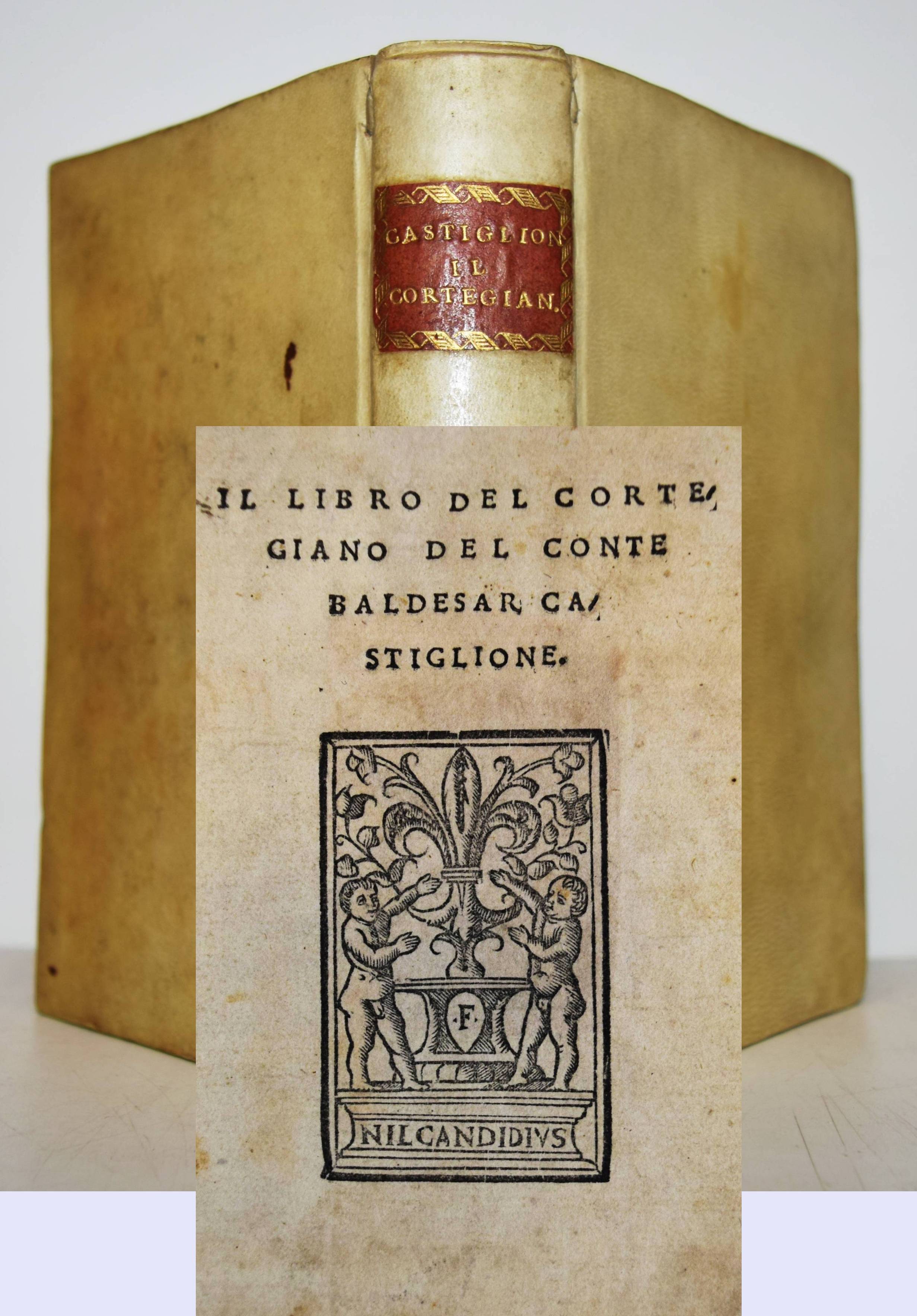
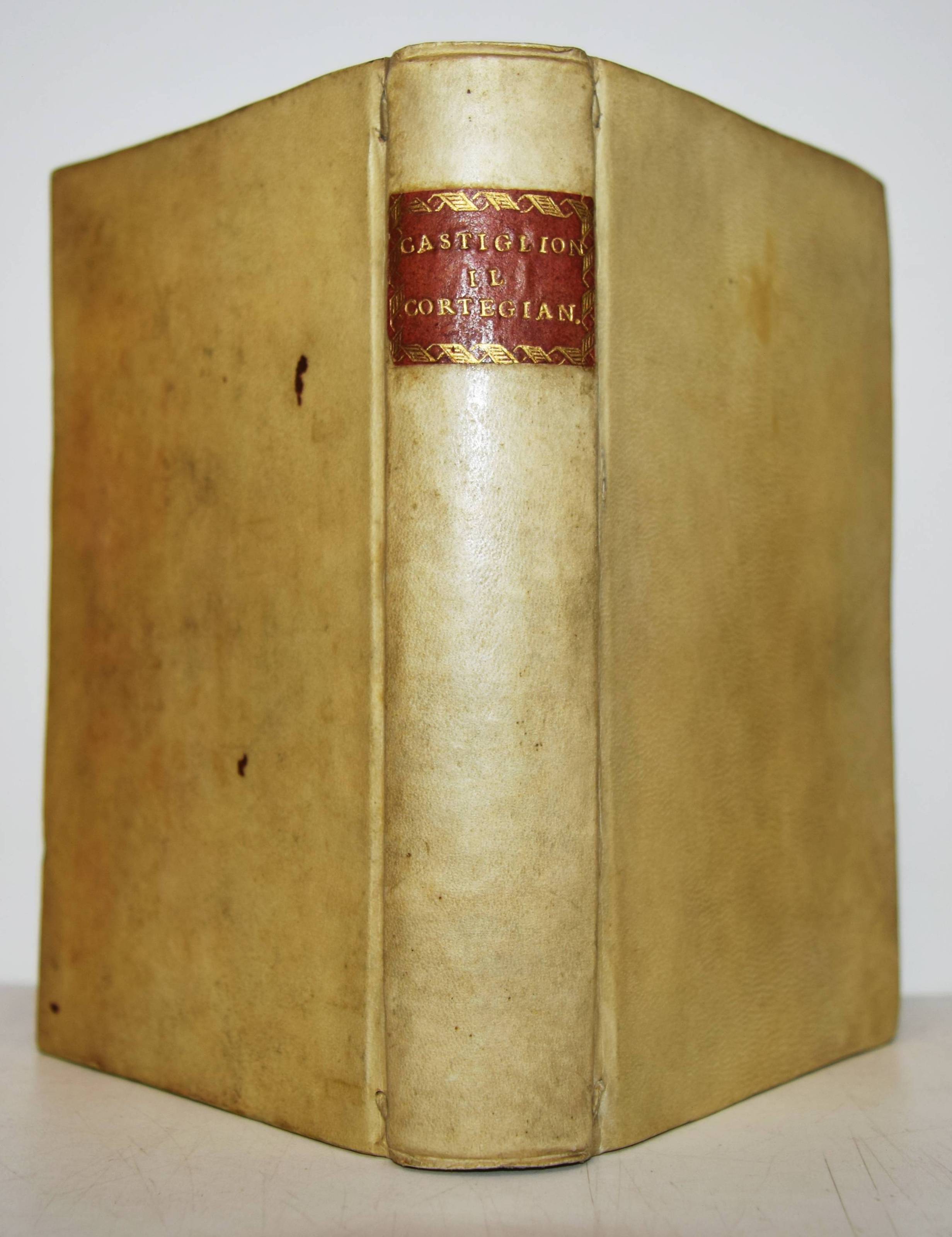
Castiglione, Il libro del Cortegiano del Conte Baldesar Castiglione

Castiglione, Il libro del Cortegiano del Conte Baldesar Castiglione

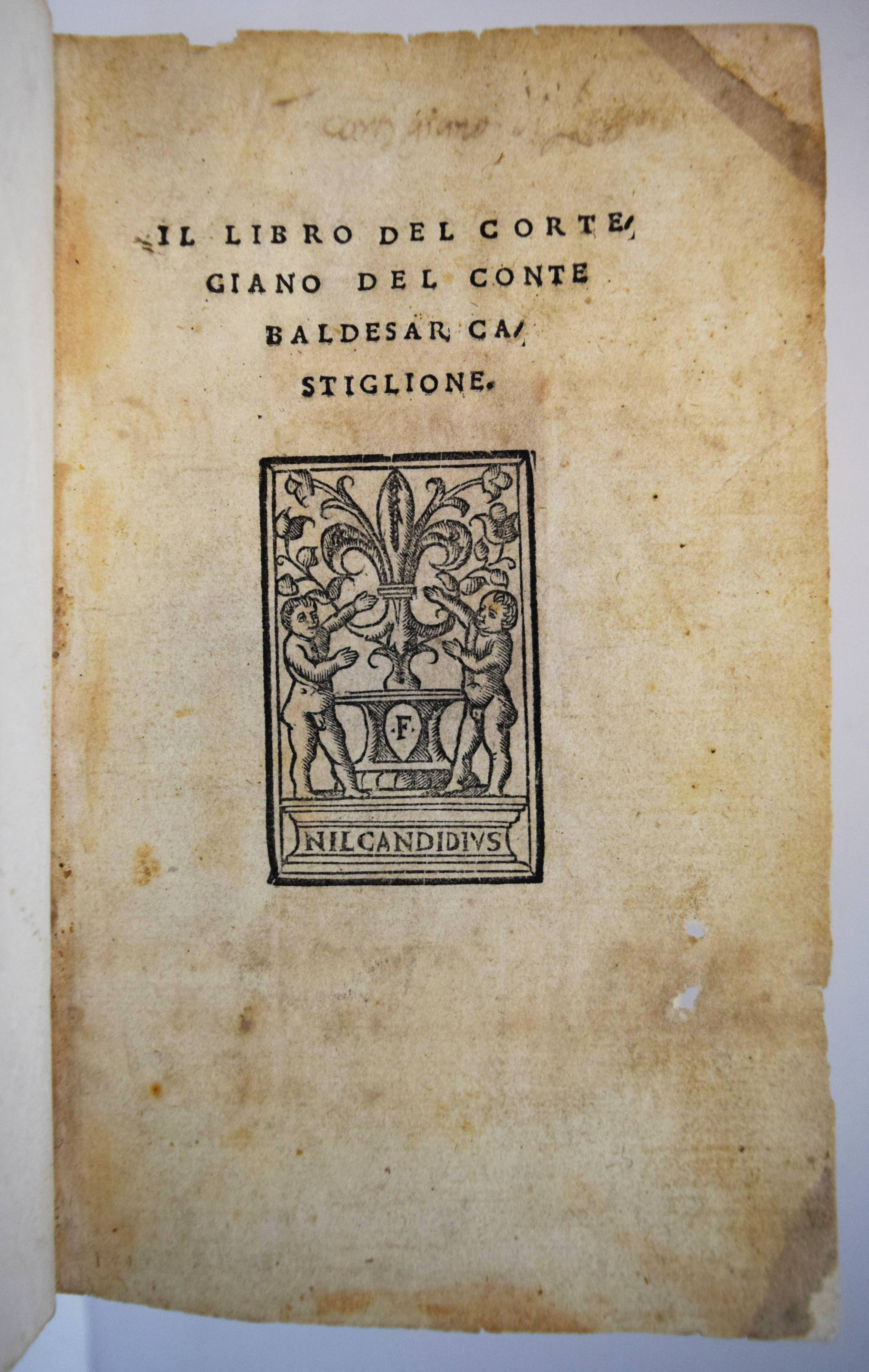
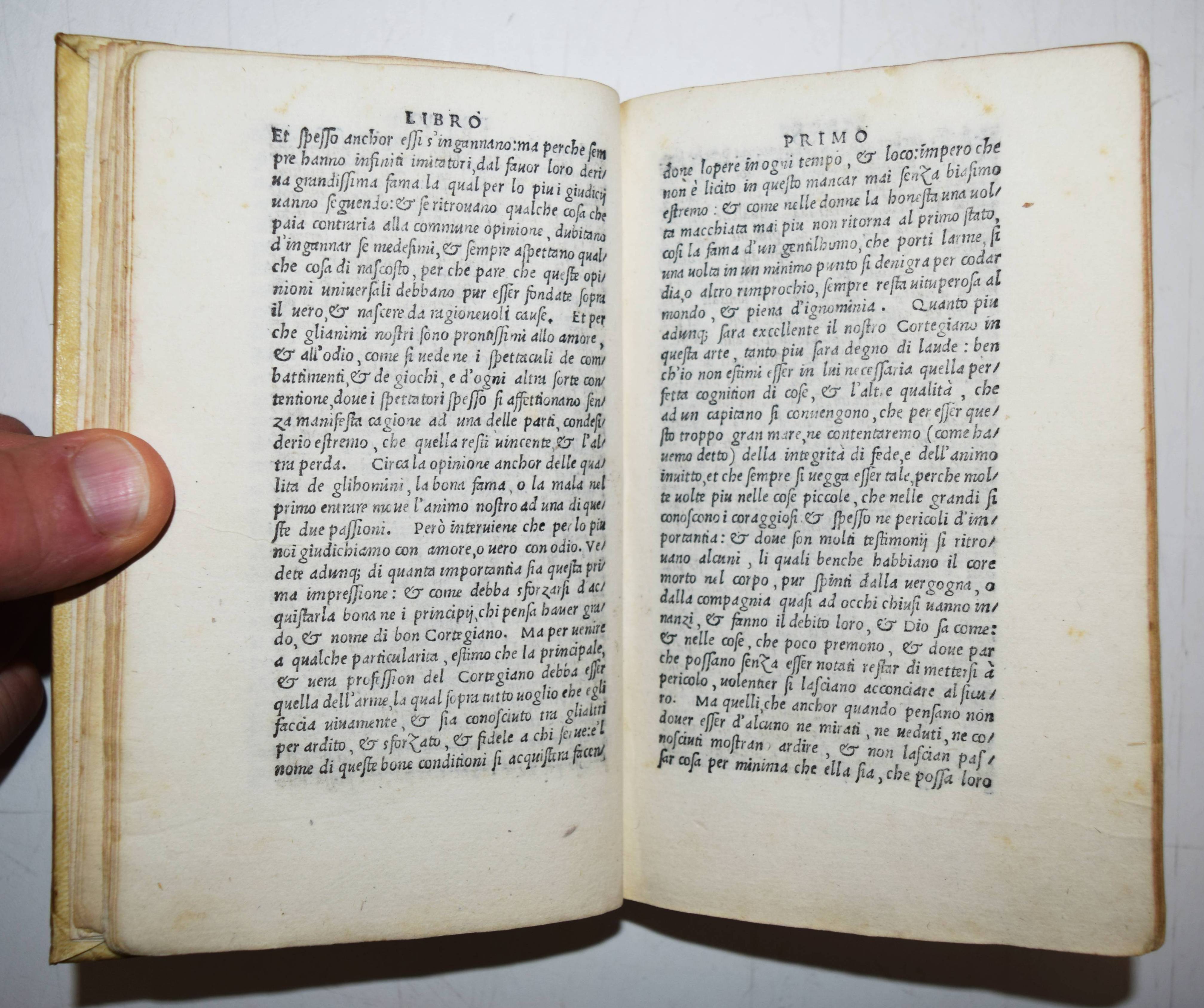
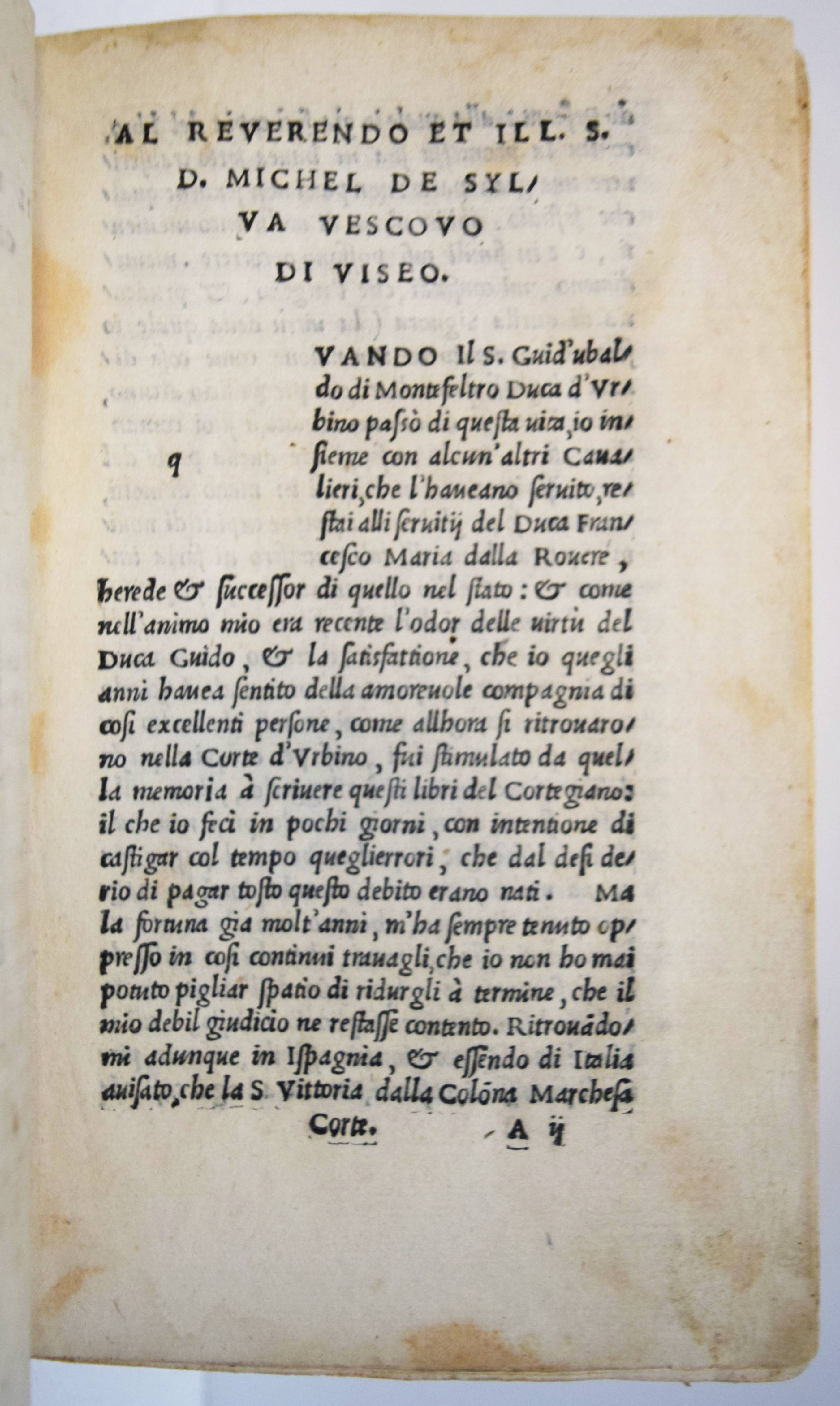
Castiglione, Baldassare. Il libro del Cortegiano del Conte Baldesar Castiglione. Firenze, per li herede di Philippo di Giunta (Ottobre 1528). Kl.-8° (16,5 x 10,5 cm.). [120] Bl. mit wdh. Titel- und Schlußvignette in Holzschnitt (Giunta-Lilie als Druckermarke). Pergamentband des 18. Jahrhunderts mit goldgepr. Rückenschild.

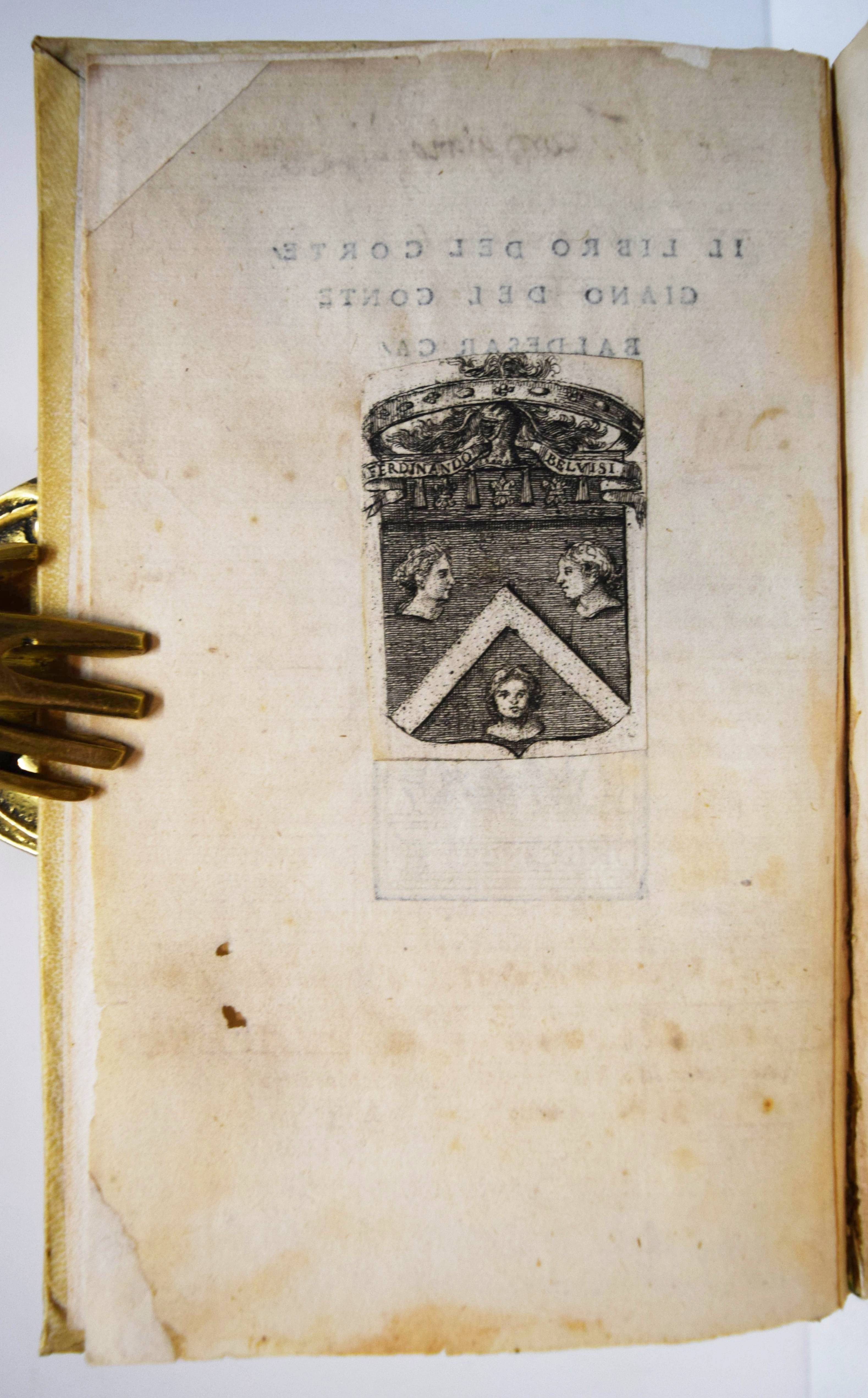
Adams C 925. Olschki 17581. – Sehr seltene zweite Ausgabe des berühmten Renaissance-Romans. Die Florentiner Taschenausgabe erschien nur fünf Monate nach der ersten Ausgabe in Folio im April 1528 bei Aldo Manuzio und Andrea Torresano in Venedig. – “Composto a partire dal primo decennio del Cinquecento e più volte rielaborato, il Cortegiano, uno dei testi più celebri ed influenti del Rinascimento italiano, è scritto in forma di dialogo. La scena si svolge ad Urbino e si sviluppa in quattro sere. Gli interlocutori sono alcuni tra i più illustri personaggi dell’epoca […]. Nel primo libro, dedicato all’educazione del gentiluomo, si affronta il tema della lingua più adeguata all’uomo di corte. […] Nel secondo libro si discorre delle qualità del cortigiano in quanto uomo sociale e del suo contegno. Egli deve sviluppare al massimo tutte le sue facoltà individuali: padroneggiare le armi, essere abile nei giochi di società, conoscere a fondo le arti e la letteratura, essere brillante ed ironico nelle conversazioni, evitare ogni affettazione. Nel terzo libro Giuliano de’ Medici e il misogino Gaspare Pallavicino discutono del ruolo della donna a corte. Infine il quarto libro tratta dei rapporti fra il cortigiano e il principe e contiene una dissertazione del Bembo sulla dottrina dell’amore platonico. Permeato di quel raffinato decoro che fu l’ideale del Rinascimento italiano, il Cortegiano, insieme galateo di buone maniere e summa della vita di corte, anche grazie al suo piacevole andamento dialogico, ebbe un enorme impatto sulla cultura europea, influenzando non solo i successivi trattati sull’argomento, ma anche la poesia e il teatro. Castiglione per primo delineò le caratteristiche e gli obblighi sociali di quella figura di perfetto gentiluomo, sicuro di sé, ironico e autosufficiente, che in Spagna prese il nome di caballero, in Francia di honnête homme e in Inghilterra, paese dove la sua influenza fu maggiore, di gentleman” (F. Govi, I classici che hanno fatto l’Italia, Milano, Regnani, 2010, pp. 60-61). – Gestoch. Wappen-Exlibris verso Titel, sehr schönes sauberes Exemplar aus der Bibliothek des Schach-Großmeisters und Karl May-Verlegers Lothar Maximilian Schmid (1928 -2013) mit dessen Exlibris.
A very rare second edition of the famous Renaissance novel. The Florentine pocket edition was published just five months after the first folio edition in April 1528 by Aldo Manuzio and Andrea Torresano in Venice. – “Composed from the first decade of the sixteenth century onwards and revised on several occasions, *The Courtier*, one of the most famous and influential texts of the Italian Renaissance, is written in the form of a dialogue. The action takes place in Urbino and unfolds over four evenings. The participants are some of the most illustrious figures of the era […]. In the first book, devoted to the education of the gentleman, the topic addressed is the language most befitting a man of the court. […] The second book discusses the qualities of the courtier as a social being and his conduct. He must develop all his individual faculties to the full: master the use of weapons, be skilled in parlour games, have a thorough knowledge of the arts and literature, be witty and ironic in conversation, and avoid all affectation. In the third book, Giuliano de’ Medici and the misogynist Gaspare Pallavicino discuss the role of women at court. Finally, the fourth book deals with the relationship between the courtier and the prince and contains a treatise by Bembo on the doctrine of Platonic love. Imbued with that refined decorum which was the ideal of the Italian Renaissance, *The Courtier* – at once a manual of etiquette and a compendium of court life – had an enormous impact on European culture, thanks in part to its engaging conversational style, influencing not only subsequent treatises on the subject but also poetry and theatre. Castiglione was the first to outline the characteristics and social obligations of that figure of the perfect gentleman—self-assured, ironic and self-sufficient—who came to be known in Spain as the ‘caballero’, in France as the ‘honnête homme’ and in England, the country where his influence was greatest, as the ‘gentleman’” (F. Govi, *I classici che hanno fatto l’Italia*, Milan, Regnani, 2010, pp. 60–61). – Engraved coat-of-arms bookplate on the reverse of the title page; a very fine, clean copy from the library of the chess grandmaster and Karl May publisher Lothar Maximilian Schmid (1928–2013), bearing his bookplate.

Unser Preis: EUR 1.800,-- 

1
2
21
3
4
5
6