




Maschinen
Die Liste enthält 11 Einträge. Suchergebnisse löschen und Gesamtbestand anzeigen.
| Abbildung |
Beschreibung Gesamte Buchaufnahme |
Preis EUR |
|
|---|---|---|---|
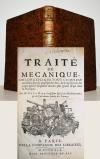 |
La Hire, (Philippe) de. Traite de mécanique. Où l’ on explique tout ce qui est nécessaire dans la pratique des arts et les propriétés des corps pesants lesquelles ont un plus grand usage dans la physique. Paris, Jean Baptiste Coignard jr. pour la Compagnie des Libraires 1729. 4° (25,5 x 19 cm.). [X], 333, (1) p. avec une vignette de titre et de nombreuses gravures sur bois dans le texte. Reliure en cuir de veau d’époque, avec une étiquette de dos estampée à l’or et des motifs floraux dorés sur le dos.
DSB VII, 586 ff. Poggendorff I, 1347 f. Roberts/Trent, Bibliotheca Mechanica 192. – Rare deuxième édition de cet ouvrage classique sur la mécanique, dont la première édition a été publiée en 1695. – „C’est plutôt Philippe de la Hire (1640-1718) qui est considéré comme le fondateur de la théorie scientifique de la denture. S’appuyant sur les travaux de Desargues et de Huygens, il a développé une théorie des épicycloïdes et des hypocycloïdes pour les grandes roues dentées utilisées dans les pompes, les moulins à vent et les moulins à eau. Les géomètres s’intéressaient généralement beaucoup à la cycloïde en raison de ses nombreuses et belles propriétés. Mais c’est de la Hire qui fut le premier à démontrer l’application systématique d’une courbe de roulement à la forme des dents d’engrenage. En 1694, il présenta de manière purement mathématique une denture permettant un rapport de transmission constant, ainsi que son application pratique“ (H. C. Graf v. Seherr-Thoß, Die Entwicklung der Zahnrad-Technik, Berlin 1965). – Dos légèrement frotté, ex-libris, articulations intérieures un peu abîmées par endroits, bel exemplaire. Schlagwörter: Maschinen, Maschinenbau, Mechanical engineering, Mechanics, Mechanik, Physics, Physik |
400,-- |  |
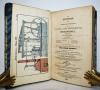 |
Millington, John. An epitome of the elementary principles of natural and experimental philosophy. Part the first (all published). Comprehending the general properties of matter, mechanics, pneumatics, acoustics, hydrostatics, hydraulics, and a copious account of the invention, progress, and present state of the steam engine. London, Printed and sold by the Author 1823. 8°. VII, 358 p. with a hand-coloured lithographed frontispiece and 13 folded lithographed plates. A later half-leather binding with a gold-embossed title on the spine.
Poggendorff II, 150. – A rare first edition.The work is based on Millington’s lectures at the Royal Institution, the London Institution and Guy’s Hospital in London, and covers the general properties of matter, mechanics, pneumatics, acoustics, hydrostatics and hydraulics. It also includes a detailed account of the invention, development and contemporary state of the steam engine. – John Millington (1779–1802) was Professor of Mechanics at the Royal Institution of Great Britain from 1817 to 1829, where he worked closely with Michael Faraday and Humphry Davy. At the end of 1829, he left England and worked as chief engineer for the Anglo-Mexican Mining Association in the Mexican silver mines, as well as serving as Superintendent of a Mint. From 1836 to 1848, he was Professor of Chemistry and Natural Philosophy at the College of William & Mary in Williamsburg, Virginia. It was there that he published his second major work, *Elements of Civil Engineering*, in 1839. From 1848 to 1853, he was one of the first professors at the newly founded University of Mississippi (holding the Chair of Natural Sciences / Chemistry and Geology) as well as State Geologist of Mississippi. From 1853, Millington held the Chair of Chemistry at Memphis Medical College in Tennessee. – A very good, clean copy. Schlagwörter: Dampfmaschinen, Maschinen, Maschinenbau, Mechanical engineering, Mechanics, Mechanik, Steam engines |
350,-- | |
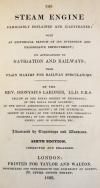 |
Lardner, Dionysius. The steam engine explained and illustrated. With an historical sketch of its invention and progressive improvement; its application to navigation and railways; with plain maxims for railway speculations. Sixth edition, corrected and enlarged. London, Taylor and Walton 1836. 8° (18 x 10,5 cm.). XII, 391, (5) p. with an engraved frontispiece and 69 woodcut illustrations in the text and on (2 folded) plates. Dark red leather binding, circa 1900, with a gold-embossed title on the spine.
Metzeltin 2117. – An early work on the steam engine and its applications, primarily for railways and shipping, first published in England in 1827. The magnum opus of the eminent Irish physicist and mathematician Dionysius Lardner (1793–1859). – The spine is slightly faded; a very good, clean copy. Schlagwörter: Dampfmaschinen, Eisenbahn, Maschinen, Maschinenbau, Mechanical engineering, Mechanics, Mechanik, Railway |
240,-- | |
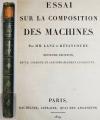 |
Lanz, (José María de) et (Agustín de) Bétancourt. Essai sur la composition des machines. 2. édition, revue corrigée et considérablement augmentée. Paris, Bachelier 1819. 4° (26 x 20,5 cm.). (6), 184 p. avec 13 planches de cuivre à plis multiples. Reliure en demi-cuir datant des environs de 1900, avec titre estampé à l’or sur le dos et dorure sur le dos.
Deuxième édition considérablement enrichie du premier manuel moderne de cinématique, paru pour la première fois en 1808. S’appuyant sur les idées de Gaspard Monge, les auteurs ont, pour la première fois, classé systématiquement les mouvements mécaniques en formes élémentaires (linéaires, circulaires, continus, alternatifs) et leurs transformations. – Agustín de Betancourt y Molina (1758-1824) dirigea, à partir de la fin des années 1780, le Cabinet royal des machines (Real Gabinete de Máquinas) à Madrid et fut l’un des fondateurs de l’École des ingénieurs des ponts et chaussées (Escuela de Ingenieros de Caminos y Canales) en 1802. Il a mis au point des inventions telles que des télégraphes optiques, des machines à vapeur et des systèmes de pompage, ainsi que des presses hydrauliques. – José María de Lanz y Zaldívar (1764-1839) a participé à des commissions scientifiques, à des travaux cartographiques et à l’enseignement, notamment en tant que professeur à l’École d’ingénieurs des routes, des canaux et des ports de Madrid (1802-1805) et en occupant des fonctions administratives et scientifiques en France et en Espagne. Il a travaillé quelque temps en Amérique du Sud, notamment en tant que directeur d’une école de mathématiques à Buenos Aires et en Grande Colombie (entre autres dans les domaines de la cartographie, de la formation et à l’Observatoire astronomique national). Il est ensuite retourné à Paris, où il a collaboré avec l’horloger Abraham-Louis Breguet et où il a vécu jusqu’à sa mort en 1839. – Ex-libris, présentant quelques taches brunes par endroits, bel exemplaire. Schlagwörter: Maschine, Maschinen, Maschinenbau, Mechanical engineering, Mechanics, Mechanik |
400,-- | |
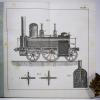 |
Poppe, Johann Heinrich Moritz v. Die praktische Mechanik und Maschinenlehre unserer Zeit. Ein faßlich dargestelltes Lehr-, Lese- und Hülfsbuch zum Nutzen und Vergnügen für alle Stände. Zürich, Friedrich Schultheß 1843. 8°. 468 S. mit 24 gefalteten lithogr. Tafeln. Leinenband der Zeit mit Romantikervergoldung.
ADB XXVI, 418 ff.Engelmann, Bibliotheca mech.-techn. S. 288. Karmarsch, Geschichte der Technologie S. 873 ff. – Erste Ausgabe. – Die dekorativen Tafeln zeigen u. a. eine Feuerspritze und zwei Lokomotiven. – J. H. M. v. Poppe war „(a)nfangs Uhrmacher, dann 1802 schwarzburg-sondershausenscher Rath, 1804 Privatdocent an der Universität Göttingen, darauf Professor der Mathematik und Physik… und zuletzt Professor der Technologie an der Universität zu Tübingen von 1818 bis 1843, wo er in den Ruhestand trat“ (Vgl. Poggendorff II, Sp. 501). – Stempel und Besitzvermerk auf dem Titelblatt, stellenweise etwas gebräunt, sehr gutes dekorativ gebundenes Exemplar. Schlagwörter: Eisenbahn, Maschinen, Maschinenbau, Mechanical engineering, Mechanics, Mechanik |
450,-- | |
 |
Poppe, Johann Heinrich Moritz v. Lehrbuch der Maschinenkunde. Nach einem neuen, umfassenderen Plane und ohne Voraussetzung höherer analytischer Kenntnisse, hauptsächlich für angehende Kameralisten, Oekonomen, Baumeister und jeden Liebhaber der Mechanik. Tübingen, C. F. Osiander 1821. 8°. XVI, 510 S. mit 6 gefalteten lithogr. Tafeln. Pappband der Zeit mit goldgepr. Rückenschild.
ADB XXVI, 418 ff. Engelmann, Bibliotheca mech.-techn. S. 287 (mit leicht abweichender Titelangabe „Lehrbuch der gesammten Maschinenkunde…“). Karmarsch, Geschichte der Technologie S. 873 ff. – Erste Ausgabe. – J. H. M. v. Poppe war „(a)nfangs Uhrmacher, dann 1802 schwarzburg-sondershausenscher Rath, 1804 Privatdocent an der Universität Göttingen, darauf Professor der Mathematik und Physik… und zuletzt Professor der Technologie an der Universität zu Tübingen von 1818 bis 1843, wo er in den Ruhestand trat“ (Vgl. Poggendorff II, Sp. 501). – Einband etwas berieben, Stempel auf dem Titelblatt, stellenweise braunfleckig, sonst gut erhalten. Schlagwörter: Maschinen, Maschinenbau, Mechanical engineering, Mechanics, Mechanik, Technologie, Technology |
320,-- | |
 |
Babbage, Charles. Traité sur l’économie des machines et des manufactures. Traduit de l’anglais sur la troisième édition, par Éd(ouard Constant) Biot. Paris, Bachelier 1833. 8°. XVI, 515 S. Halblederband der Zeit mit goldgepr. Rückenschild und Linienvergoldung.
Vgl. DSB, I, 354. – Erste französische Ausgabe von „On the economy of machinery and manufactures“ (London 1832). – Der britische Mathematiker, Philosoph, Erfinder und Ökonom Chrales Babbage (1791-1871) ist international durch seine mechanischen Rechenmaschinen Difference Engine und Analytical Engine bekannt. – „Es ist das Zeitalter der Dampfmaschine, neuer unbegrenzter Arbeitskraft, maschineller Massenproduktion. Das Zeitalter der Industrialisierung. Die Maschine verspricht Perfektion, wo der Mensch Fehler macht. Und Babbages Maschinen sollen die Welt von allen Rechenfehlern befreien, indem er die Mechanisierung von den Dingen auf das Denken überträgt. So wird Charles Babbage zum „Vater des Computers“. Ein Pionier, seiner Zeit so weit voraus, dass er nur siegreich scheitern konnte“ (W. Burgmer, WDR Zeitzeichen vom 26. 12. 2016). – Der Übersetzer E. C. Biot (1803-1850) verfasste eines der ersten Handbücher über den Eisenbahnbau „Manuel du constructeur des chemins de fer“ (Paris 1834). – Einband etwas berieben, Titelblatt und die ersten 15 Seiten mit teils stärkeren Wasserflecken, sonst nur vereinzelt etwas braunfleckig, gutes Exemplar. Schlagwörter: Machinery, Manufactures, Maschinen, Maschinenbau, Mechanical engineering, Mechanics, Mechanik |
350,-- | |
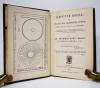 |
Dircks, Henry. Perpetuum Mobile; or, search for self-motive power during the 17th, 18th and 19 Centuries. Illustrated from various authentic sources, in papers, essays, letters, paragraphs and numerous patent specifications. With an introductory essay. London, E. & F. N. Spon 1861. 8°. XII, 558 S., [4] Bl. mit ca. 125 Abbildungen. Orig.-Leinenband mit goldgepr. Rückentitel.
Ferguson, Bibliography of the History of Technology 47 f. Mottelay/Fleury, Bibliographical History of Electricity 47. Poggendorff III, 364. – Sehr seltene Original-Ausgabe des wichtigen Quellenwerks zu dem technikgeschichtlichen Irrläufer Perpetuum Mobile. – Der britische Ingenieur und Erfinder H. Dircks (1806-1873) nähert sich dem Thema mit der Skepsis des gelernten Ingenieurs. Das Buch sammelt akribisch historische Berichte, Briefe, wissenschaftliche Aufsätze und insbesondere zahlreiche Patentschriften jener Epochen. Es dokumentiert den Erfindergeist, aber auch die physikalischen Trugschlüsse von Theoretikern und Handwerkern, die versuchten, Maschinen zu konstruieren, die ohne äußere Energiezufuhr dauerhaft Arbeit verrichten. Ein prominentes Kapitel widmet sich beispielsweise den Entwürfen des Marquis of Worcester. In deutschen Werken zur Technikgeschichte wird das Buch als die erste Chronik zum Thema klassifiziert. So verweist beispielsweise Arthur W. J. G. Ord-Hume in seinen modernen Bibliographien zum Perpetuum mobile direkt auf Dircks als Urvater der systematischen Erfassung. Auch frühe deutsche Abhandlungen – wie etwa die von Technikhistorikern genutzte Schrift Das Perpetuum mobile (Wien, 1900) von Anton Daul – basieren bibliographisch direkt auf der Vorarbeit von Henry Dircks. – Dircks erlangte internationale Bekanntheit durch seine Erfindung „Pepper’s Ghost“ von 1858. Durch eine im 45-Grad-Winkel auf der Bühne aufgestellte Glasplatte und geschickte Beleuchtung konnte eine verborgene Person als transparenter, dreidimensionaler „Geist“ für das Publikum sichtbar gemacht werden. – Sehr schönes sauberes Exemplar. Schlagwörter: History of Technology, Maschinen, Maschinenbau, Mechanical Engineering, Perpetuum mobile, Technikgeschichte, Technology |
450,-- | |
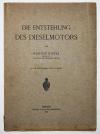 |
Diesel, Rudolf (Christian Karl). Die Entstehung des Dieselmotors. Berlin, Julius Springer 1913. 4° (28 x 20 cm.). [2] Bl., 158 S. mit 83 Abbildungen im Text und 3 gefaltete Tafeln. Typogr. Orig.-Kartonumschlag.
NDB III, 660 ff. – Erste Buchausgabe der Schrift über den 1893 von Rudolf Diesel erfundenen Verbrennungsmotor. – „Zwischen 1893 und 1897 verwirklichte D. in der Maschinenfabrik Augsburg den Dieselmotor. Der Direktor dieses Werkes, H. Buz, war von D.s Erfindung und Persönlichkeit überzeugt und gewährte ihm jegliche Hilfe. Krupp beteiligte sich an der Finanzierung. Nach unsäglichem Arbeitsaufwand und vielen Fehlschlägen war um die Wende 1896/97 ein Motor entstanden, der sich sofort als die weitaus beste Wärmekraftmaschine erwies. Sie lief mit Petroleum und bald mit Rohöl, das in rasch zunehmendem Maße in der ganzen Welt gefördert wurde, so daß die neue Maschine durchaus der Zeitlage entsprach. Die Welt begriff, daß es sich um ein technisches Ereignis von epochemachender Bedeutung handelte; D. wurde mit einem Schlage berühmt und reich“ (Eugen Diesel in NDB). – Vorderes Gelenk am Fuss etwas eingerissen, Exlibris und zeitgenöss. Besitzvermerk auf dem Titelblatt, sehr gutes unbeschnittenes Exemplar. Schlagwörter: Automobil-/Motorradliteratur, Automobiltechnik, Dieselmotor, Maschinen, Maschinenbau, Motorenbau |
280,-- | |
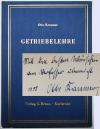 |
Kraemer, Otto. Getriebelehre. Eine Auswahl für Studium und Praxis. 2., überarbeitete Auflage. Karlsruhe, G. Braun (1959). 8°. 264 S. mit 496 Abbildungen. Orig.-Leinenband mit goldgepr. Rücken- und Deckeltitel. (Wissenschaftliche Bücherei).
Mit eigenhändiger Widmung von O. Kraemer. – Der Maschinenbauingenieur O. Kraemer (1900-1986) war von 1936 bis 1968 Ordinarius an der Technischen Hochschule Karlsruhe. „Seit 1938 wurde seinem Lehrstuhl das Lehrgebiet Getriebelehre angegliedert. Seine Vorlesungen umfassten die Gebiete Verbrennungsmotoren, Dampfkolbenmaschinen, Getriebelehre, Schwingungslehre und Regelungstechnik. Für Letzteres kann er als Pionier einer inzwischen stark weiter entwickelten Spezialwissenschaft gelten“ (Wikipedia). – Sehr schönes Exemplar. Schlagwörter: Maschinen, Maschinenbau, Signierte Bücher, Widmungsexemplar |
70,-- | |
 |
Armengaud, (Jacques Eugène). Traité théorique et pratique des moteurs a vapeur. Tome premier (et) deuxième. 2 Bände. Paris, chez l’auteur 1861 et 1862. 4°. VIII, 560 S.; 639, (1) S. mit zahlr. Holzstich-Illustrationen. Orig.-Halblederbände mit goldgepr. Rückentiteln und Rückenvergoldung.
Poggendorff III, 41. – Der französische Ingenieur Jacques Eugène Armengaud (1810-1891), der sich „hervorragend als technischer Schriftsteller betätigte“, vermittelte „in jener an technischer Literatur armen Zeit dem gesamten Maschinenbau die Kenntnis der vorhandenen Konstruktionen und Anregung zu neuen Entwürfen“ (Matschoss, Männer der Technik S. 7). – Ohne den Atlasband. – Durchgehend etwas braunfleckig, gutes Exemplar. Schlagwörter: Dampfmaschinen, Maschinen, Maschinenbau |
120,-- | |
|
Einträge 1–11 von 11
Zurück · Vor
|
|||
| Seite: 1 |