NEUER E-KATALOG: Neueingänge Oktober 2026 – Wir stellen aus: Polycopies Photobook-Fair, Paris, Bateau Concorde-Atlantique – Port de Solferino, 11.-15. November 2026, [http://www.polycopies.net/] – Gemeinschaftskatalog zusammen mit Antiquariat Norbert Knöll, Lüneburg: POPKULTUR / POP CULTURE Bücher, Fotografien, Schallplatten und Graphik. – PHOTOGRAPHIE / PHOTOGRAPHY – wichtige Fotobücher von 1839 bis heute, darunter zahlreiche Widmungsexemplare und Bücher mit Orig.-Photographien (kann unter „Aktuelle Kataloge“ abgerufen werden). – Außerdem finden Sie Beiträge von uns im virtuellen „Schaufenster“ des Verbandes Deutscher Antiquare (VDA) [https://schaufenster.antiquare.de/trefferliste.php?ID=22] (oder über „Links“ VDA) – Versandkosten ins Ausland auf Anfrage. – Besuchen Sie uns in unserem neuen Ladengeschäft in der Kaiserstrasse 99 in Karlsruhe (Mo.-Fr. 11-18 Uhr, Sam. 11-16 Uhr) mit einer reichen Auswahl seltener und schöner Bücher aus allen Gebieten, Graphik und Photographien. – Instagram: rarebookskarlsruhe – NEW E-CATALOGUE: New arrivals October 2026 – We are exhibiting at: Polycopies Photobook Fair, Paris, Bateau Concorde-Atlantique – Port de Solferino, 11–15 November 2026, http://www.polycopies.net/ – Joint catalogue with Antiquariat Norbert Knöll, Lüneburg: POP CULTURE – books, photographs, records and prints. – PHOTOGRAPHY – important photobooks from 1839 to the present day, including numerous signed copies and books containing original photographs (available under ‘Aktuelle Kataloge’). – You will also find our listings in the virtual ‘shop window’ of the Association of German Antiquarian Booksellers (VDA) at https://schaufenster.antiquare.de/trefferliste.php?ID=22 (or via the ‘Links’ section on the VDA website) – postage costs for international orders available on request. – Visit us at our new shop at Kaiserstrasse 99 in Karlsruhe (Mon–Fri 11am–6pm, Sat 11am–4pm), where you’ll find a rich selection of rare and beautiful books from all subject areas, as well as prints and photographs. – Instagram: rarebookskarlsruhe

Streetphotography

Die Liste enthält 3 Einträge. Suchergebnisse löschen und Gesamtbestand anzeigen.

: : :
Abbildung
 
Beschreibung
Gesamte Buchaufnahme
Preis
EUR
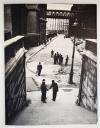
1 Keuken, Jo(h)an van der. Paris Mortel. Hilversum, (C. de Boer) DEBO (1963). 4° (29 x 22,5 cm.). 138 S. mit 65 teils doppelblattgr. Duotone-Tafeln. Orig.-Leinenband mit typogr. Schutzumschlag.

Auer 423. Heiting, Dutch photo publications 569. Koetzle, Eyes on Paris 316 f. Parr/Badger I, 248 f. Roth, The Open Book 196. – Erste Ausgabe der dritten Veröffentlichung des bedeutenden niederländischen Fotografen. Eines von 1000 Exemplaren; Text in Niederländisch, Englisch, Französisch und Deutsch. Die Aufnahmen entstanden zwischen Oktober 1956 und August 1958. J. van der Keuken (1938-2001) studierte 1956 bis 1958 an der Filmhochschule Hautes Ètudes Cinématographiques (IDHEC) in Paris. Während seines Studiums „fotografiert van der Keuken in den Straßen von Paris. Tausende von Aufnahmen sollen so entstanden sein, formal-ästhetisch unter dem Einfluss von William Klein, dessen 1956 erschienener „New York“-Band in jenen Tagen für Gesprächsstoff sorgt. Politisch bestimmen der Algerienkrieg, die instabile Vierte Republik, die prekäre Wirtschaftslage den Diskurs. Auch wenn Titel wie „Vrouwen van Parijs“ von Nico Jesse oder „Paris des Rues et des chansons“ von René Maltête ein anderes Paris – Bild zeichnen, es ist eine bleierne Zeit, der sich Johan van der Keuken stellt. Entsprechend finster gibt sich seine Bildsprache. Dem Gros der Motive haftet etwas Düsteres, Morbides an. Erzählt wird von Armut, Not, Verfall. Durch die Bank strenge Mienen, kaum ein Lächeln und schon gar kein Lachen. Einmal wird getanzt, geflirtet, aber vor reichlich schäbiger Kulisse. Schon häufiger wird paradiert, protestiert, salutiert: In Gesten und Parolen sucht eine Nation Halt, deren Größe auf dem Prüfstand steht. Auf vielen Bildern ist es Abend oder Nacht, und dass das letzte der insgesamt sechs Bild-Kapitel dem Friedhof Père-Lachaise gewidmet ist, hinterlässt als Epilog einen besonders bitteren Nachgeschmack. „Paris mortel“ – schon der provokante Titel kündigt es an – ist die gedruckte Antithese zum Mythos der heiteren Kunst- und Musenstadt. Fast durchgängig herrscht ein ärmlicher Alltag. Auf keinem der Motive ist eines der klassischen Wahrzeichen zu sehen, sieht man ab von der Métro, deren schwach illuminiertes Labyrinth allerdings perfekt zum angeschlagenen Grundton passt. … „Paris mortel“ präsentiert sich als sinistre Phantasie: Ein Low-key geträumter Traum, der dem fotografischen Aufbruch einer New York School mit Namen wie Louis Faurer, Saul Leiter oder Robert Frank im Grunde näher steht als der Photographie humaniste der 50er Jahre. So schlägt „Paris mortel“ gleich in zweifacher Hinsicht eine Brücke: Von der bildhaften Anekdote zum visuelen Statement und vom Fotoband zum Künstlerbuch“ (H.-M. Koetzle). – Schutzumschlag am Rückendeckel im unteren Rand geringfügig beschädigt, sehr gutes Exemplar.
First edition of the third publication by the eminent Dutch photographer. One of 1,000 copies; text in Dutch, English, French and German. The photographs were taken between October 1956 and August 1958. J. van der Keuken (1938–2001) studied at the Hautes Études Cinématographiques (IDHEC) film school in Paris from 1956 to 1958. Whilst at university, van der Keuken took photographs in the streets of Paris. It is said that he took thousands of shots, stylistically and aesthetically influenced by William Klein, whose 1956 book *New York* was the talk of the town at the time. Politically, the discourse was dominated by the Algerian War, the unstable Fourth Republic and the precarious economic situation. Even though titles such as *Vrouwen van Parijs* by Nico Jesse or *Paris des Rues et des chansons* by René Maltête paint a different picture of Paris, it was a bleak period that Johan van der Keuken was confronting. His visual language is correspondingly sombre. There is something gloomy and morbid about the majority of his subjects. They tell of poverty, hardship and decay. Across the board, stern expressions; hardly a smile, and certainly no laughter. There is one instance of dancing and flirting, but against a decidedly shabby backdrop. More frequently, people are marching, protesting, saluting: through gestures and slogans, a nation whose greatness is being put to the test seeks a foothold. In many of the images, it is evening or night, and the fact that the final of the six pictorial chapters is devoted to the Père-Lachaise cemetery leaves a particularly bitter aftertaste as an epilogue. “Paris mortel” – as the provocative title itself suggests – is the printed antithesis to the myth of the cheerful city of art and muses. A bleak everyday reality prevails almost throughout. None of the images feature any of the classic landmarks, apart from the Métro, whose dimly lit labyrinth, however, fits perfectly with the sombre underlying tone. … “Paris mortel” presents itself as a sinister fantasy: a low-key, dreamlike vision that is, in essence, closer to the photographic breakthrough of the New York School – with names such as Louis Faurer, Saul Leiter and Robert Frank – than to the ‘photographie humaniste’ of the 1950s. Thus, “Paris mortel” builds a bridge in two respects: from the pictorial anecdote to the visual statement, and from the photo book to the artist’s book” (H.-M. Koetzle). – Dust jacket slightly damaged at the bottom edge of the back cover; a fine copy with near fine dustjacket.

Schlagwörter: Paris, Street photography, Streetphotography

Details anzeigen…

1.400,--  Bestellen
1 Moriyama, Daido and Michel Bulteau. Solitude de l’oeil. Poèmes (and) photographies. Paris, Toluca Editions Mai 2007. Imperial-Folio (52 x 42 cm.). Illustr. Titel und 6 illustr. Karton-Blätter mit mont. Farbphotographien (chromogenic prints, 19,5 x 21,5 cm.). Achteckige Orig.-Kunststoff-Buchkassette (51,7 x 42,5 x 5,2 cm.) in Leinenkassette.

No. 10 von 40 Exemplaren; im Druckvermerk von D. Moriyama und M. Bulteau signiert. Texte in Französisch und Japanisch. – „Édition limitée à 40 exemplaire chaque exemplaire est illustré de 6 tirages C-print signés. – Conception graphique: Olivier Andreotti.“ – „Daido Moriyamas Vision liegt im Herzen der Dunkelheit, sowohl im eigentlichen als auch im übertragenen Sinne. Die Welt, die er aufzeichnet, ist schwarz, vom Licht eher betäubt als beleuchtet, bedrohlich, chaotisch, unverständlich, zwanghaft erotisch, besessen exzentrisch, konsumfixiert, verwüstet von Unfällen, nie im Gleichgewicht, manchmal zugrunde gerichtet, bisweilen leer – eine Welt, die sich ihrer eigenen Instabilität nicht bewusst ist, eine Welt, die Prozac braucht. Seine fotografischen Methoden, geprägt von Unschärfen und Kratzern, ausgeblichenen Farben und Staub, verschmelzen mit seinen Motiven zu Dolkumenten, die kurz vor dem Verfall stehen. Manchmal spielt Moriyama mit den Grenzen der Wahrnehmung und mit den Grenzen der Fotografie; beides lässt er hoffnungslos eng gesteckt erscheinen. Eine unerbittliche, sogar grimmige Vision, individuell und authentisch, die bis an ihre eigenen Grenzen geht“ (V. Goldberg in Koetzle, Fotografen A-Z). – Sehr gutes Exemplar.
No. 10 of 40 copies; signed by D. Moriyama and M. Bulteau in the imprint. Texts in French and Japanese. – „Limited edition of 40 copies, each copy illustrated with 6 signed C-print prints. – Graphic design: Olivier Andreotti.“ – „Daido Moriyama’s vision lies at the heart of darkness, both literally and figuratively. The world he records is black, numbed rather than illuminated by light, threatening, chaotic, incomprehensible, compulsively erotic, obsessively eccentric, fixated on consumption, ravaged by accidents, never in balance, sometimes ruined, sometimes empty – a world unaware of its own instability, a world in need of Prozac. His photographic methods, characterised by blurring and scratches, faded colours and dust, merge with his motifs to create documents that are on the verge of decay. Sometimes Moriyama plays with the limits of perception and the limits of photography; he makes both appear hopelessly narrow. A relentless, even grim vision, individual and authentic, that pushes itself to its own limits“ (V. Goldberg in Koetzle, Photographers A-Z). – Very good copy.

Schlagwörter: Japan, Nummerierte Bücher, Signierte Bücher, Street photography, Streetphotography, Tokio, Tokyo

Details anzeigen…

5.800,--  Bestellen
001 Strömholm, Christer. Till minnet av mig själv. (Essay by Per Olof Sundman, Peter Weiss and Tor-Ivan Odulf). Stockholm, Nordisk Rotogravyr (1965). 8°. [20] Bl. mit 36 Abb. auf 32 Duotone-Tafeln (davon 2 auf den Innendeckeln) und [8] S. Text. Illustr. Orig.-Kartonumschlag mit Klarsicht-Schutzumschlag. (Foto expo-bok, Band 5).

Auer 443. Koetzle, Fotografen A-Z 391. The Open Book 216 f. Vgl. Koetzle, Eyes on Paris 50 ff. (zu Vännerna Fran Place Vlanche, Stockholm 1983). – Seltene erste Ausgabe der ersten Veröffentlichung des „führenden Kamerakünstler(s) Skandinaviens nach 1945“ (H.-M. Koetzle). – C. Stömholm (1918-2002) ist „international v. a. bekannt durch seine frühen Paris-Aufnahmen im Geist des Existenzialismus“ (H.-M. Koetzle). – „Seit den 1950er-Jahren einer der führenden Fotografen Skandinaviens, gelang Christer Strömholm nach dem Zweiten Weltkrieg als Erstem von ihnen der internationale Durchbruch. Anfang der 1950er-Jahre der deutschen Gruppierung Fotoform beigetreten, entwickelte Strömholm während seiner Pariser Zeit gegen Ende der Dekade eine dem Existenzialismus entsprechende fotografische Ausdrucksweise. Seitdem haben seine Bilder sehr dazu beigetragen, dass sich die Fotografie in Europa zu einer eigenständigen Kunstform entwickelte“ (G. Knape in Koetzle). – Sehr gutes sauberes Exemplar.
Rare first edition of the first publication by “Scandinavia’s leading camera artist after 1945” (H.-M. Koetzle). – C. Stömholm (1918-2002) is “internationally known above all for his early Paris photographs in the spirit of existentialism” (H.-M. Koetzle). – “One of Scandinavia’s leading photographers since the 1950s, Christer Strömholm was the first of them to achieve an international breakthrough after the Second World War. Joining the German group Fotoform in the early 1950s, Strömholm developed a photographic style in line with existentialism during his time in Paris towards the end of the decade. Since then, his pictures have contributed greatly to the development of photography in Europe into an independent art form” (G. Knape in Koetzle). – Very good clean copy.

Schlagwörter: Paris, Street photography, Streetphotography

Details anzeigen…

400,--  Bestellen
Einträge 1–3 von 3
Zurück · Vor
Seite: 1
: